

Here's something that'll probably frustrate you: your site's impressions might be climbing while your traffic tanks. Welcome to 2026, where zero-click searches jumped from 56% to nearly 69% after AI Overviews rolled out.
This shift changes everything about how you need to configure RankMath. It's not just about ranking anymore. You're optimizing for AI answers, featured snippets, and those instant results that keep people from ever clicking through to your site.
But here's the good news: RankMath has evolved to handle these challenges. When you configure RankMath properly, you're setting up your site to appear in AI Overviews, rich results, and traditional search rankings. The plugin generates structured data automatically, helps you optimize for featured snippets, and gives you the tools to compete in this new search landscape.

What Proper RankMath SEO Optimization Gets You
When you finish this guide, you'll have a WordPress site that's optimized for both traditional search and AI-powered results. Your content will be structured for maximum visibility, your technical SEO will be solid, and you'll have the analytics setup to track what's actually working.
More importantly, you won't waste time on settings that don't matter or make configuration mistakes that hurt your rankings.
Getting RankMath Installed and Running
Installing RankMath is straightforward, but the setup wizard is where most people either nail it or create problems they'll deal with for months.
Installing the Plugin
Go to your WordPress dashboard, click Plugins, then Add New. Search for "Rank Math" and you'll see it near the top. Click Install Now, then Activate.
The setup wizard launches automatically. Don't skip it. I know it's tempting to click through quickly, but the choices you make here affect your entire site's SEO foundation.
Working Through the Setup Wizard
The wizard asks about your site type first. If you're running a blog, choose Blog. For business sites, pick Small Business. This choice determines your default schema markup and some automated settings.
Next comes Google Search Console integration. This is critical. RankMath pulls real search data directly into your WordPress dashboard when connected. You'll see which keywords are driving impressions, where you're ranking, and which pages need work.
The wizard also asks about sitemap preferences. Keep the default settings here unless you have a specific reason to change them. RankMath automatically excludes things like attachment pages and creates separate sitemaps for posts, pages, and other content types.
Free vs. Pro: What You Actually Need
The free version handles most SEO needs. You get schema markup, sitemap generation, on-page optimization tools, and basic analytics. For many sites, that's enough.
Pro adds features like tracking unlimited keywords, advanced schema types, local SEO tools, and Google Trends integration. If you're serious about SEO or running a business site, Pro is worth considering. But start with free and upgrade when you hit its limitations.
Core RankMath Settings That Actually Matter
Now we're getting into the settings that separate well-optimized sites from the rest. These configurations affect every page on your site, so getting them right matters.
General Settings Worth Configuring
Navigate to Rank Math > General Settings. Under the Links tab, you'll find options for nofollow external links and opening links in new tabs. I typically leave external links as dofollow unless there's a specific reason to nofollow them. Search engines are smart enough to understand natural linking patterns.
The Images tab lets you add default alt text and title attributes. Enable "Add Missing Alt Attributes" and set a template like %filename%. This ensures every image has alt text even if you forget to add it manually.
Titles and Meta Templates
Go to Rank Math > Titles & Meta. This is where you set templates for how your pages appear in search results.
For posts, the default template is usually %title% %sep% %sitename%. That works fine. For pages, you might want just %title% to save character space in search results.
The meta description template matters less than you'd think. Google often rewrites descriptions anyway based on the search query. But having a template ensures you always have something there.
Sitemap Configuration
RankMath generates XML sitemaps automatically. Go to Rank Math > Sitemap Settings to configure what's included.
Include your main content types: posts, pages, and any custom post types you use. Exclude things like tags, author archives, and attachment pages. These rarely need to be in search results and just clutter your sitemap.
After configuring your sitemap, submit it to Google Search Console. Then flush your permalinks by going to Settings > Permalinks and clicking Save Changes. This ensures WordPress recognizes the sitemap URLs properly.
Robots.txt Setup
RankMath includes a robots.txt editor at Rank Math > General Settings > Edit robots.txt. The default configuration works for most sites, but you might want to add specific crawl directives.
For example, if you have a staging environment or admin areas you don't want crawled, add those paths here. Just be careful not to accidentally block important content.
Advanced Configuration for 2026 SEO
This is where RankMath settings really shine. These features help you compete for AI Overview placements and rich results.
Schema Markup That Works
Schema markup tells search engines exactly what your content is about. RankMath adds schema automatically based on your content type, but you can customize it for better results.
When editing a post, scroll to the Rank Math meta box and click the Schema tab. You'll see options for Article, Review, Recipe, and other schema types. Choose the one that matches your content.
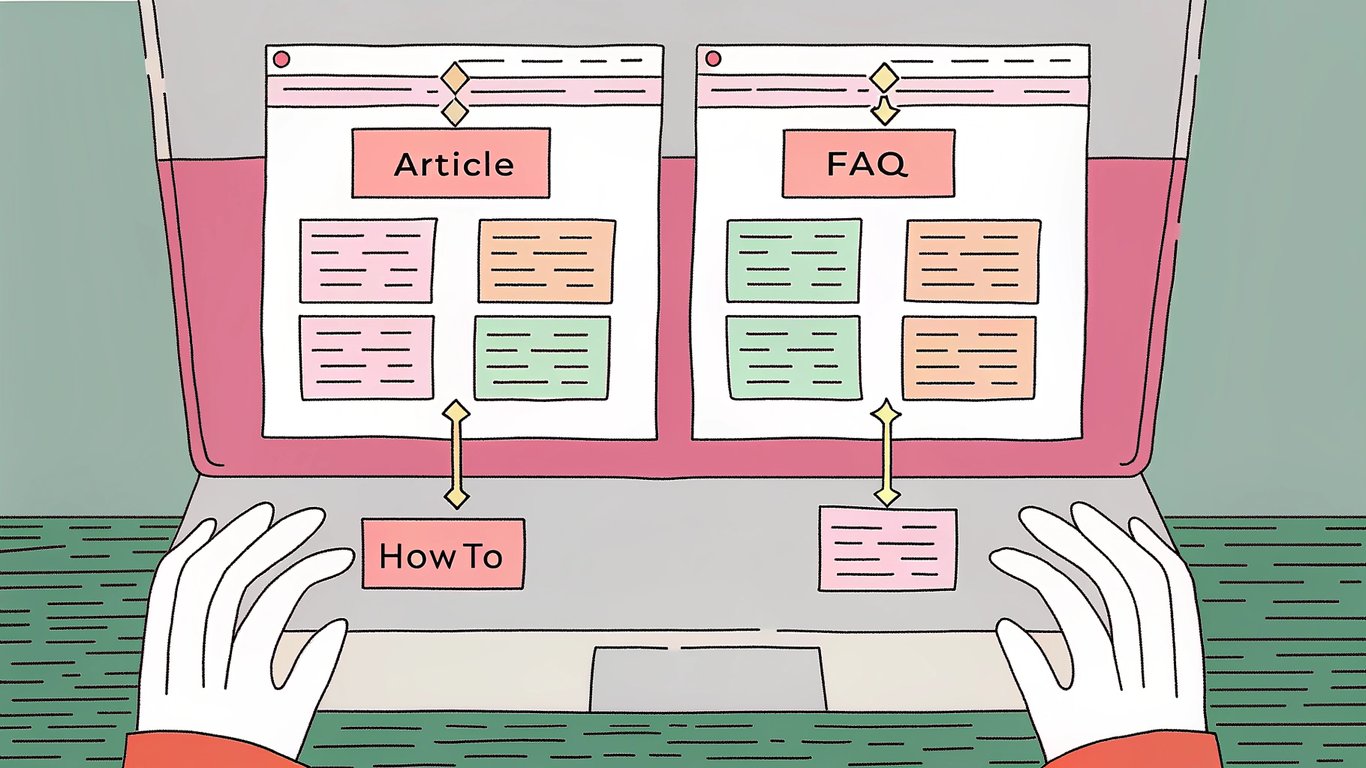
For blog posts, Article schema works fine. For product reviews, use the Review schema and fill in the rating fields. For how-to content, the HowTo schema can get you into special search result features.
Optimizing for AI Overviews
Here's a technique that's working well in 2026: structure your content with FAQ schema and unique CSS classes for featured snippets.
In your post editor, give important headings and their answer paragraphs a unique CSS class using dashes instead of spaces. Then go to the Rank Math meta box, click the Schema tab, and add FAQ schema. Map your CSS classes to the FAQ questions and answers.
This structured approach helps AI systems understand and extract your content for AI Overviews. It's not guaranteed placement, but it significantly improves your chances.
404 Monitoring and Redirects
RankMath tracks 404 errors automatically. Go to Rank Math > 404 Monitor to see which URLs are returning errors.
When you find broken links, set up redirects at Rank Math > Redirections. Use 301 redirects for permanent moves and 302 for temporary ones. This preserves your SEO equity when you change URLs or remove content.
Local SEO Configuration
If you run a local business, configure your business information at Rank Math > Local SEO. Add your business name, address, phone number, and operating hours.
RankMath automatically adds local business schema to your site, which helps you appear in local search results and Google Maps.
Analytics Setup
RankMath's analytics dashboard shows keyword rankings, click-through rates, and content performance. Enable it at Rank Math > General Settings > Analytics.
The dashboard updates daily with data from Google Search Console. You'll see which keywords are gaining or losing positions, which pages get the most impressions, and where you have opportunities to improve.
Optimizing Individual Posts and Pages
Global settings handle your site-wide SEO, but you'll configure RankMath for each piece of content too.
Using the Content Analysis Tool
When editing a post, you'll see the Rank Math meta box below your content editor. It shows an SEO score out of 100 and lists specific recommendations.
Don't obsess over getting 100/100. A score in the 80s or 90s is fine. Focus on the recommendations that actually matter: using your keyword in the title, having a reasonable content length, and including internal links.
Focus Keyword Strategy
Set your primary keyword in the Focus Keyword field. RankMath analyzes how well you've optimized for that term.
With the Pro version, you can add multiple focus keywords. This is useful for content that targets several related search terms.
But don't keyword stuff. Write naturally and use your focus keyword where it makes sense. RankMath's recommendations are guidelines, not requirements.
Writing Titles and Descriptions
Your SEO title appears in search results. Keep it under 60 characters so it doesn't get cut off. Include your primary keyword near the beginning.
Meta descriptions should be around 155 characters. Write them to entice clicks, not just to include keywords. Think of them as ad copy for your content.
Internal Linking Features
RankMath suggests internal links as you write. When you type, it scans your existing content and recommends relevant posts to link to.
Use these suggestions. Internal linking helps search engines understand your site structure and keeps visitors engaged longer.
Image Optimization
Add descriptive alt text to every image. RankMath reminds you when images are missing alt attributes.
Good alt text describes what's in the image for people using screen readers and helps search engines understand your visual content. Include your keyword in alt text when it's relevant, but don't force it.
Common Mistakes and Best Practices
I've seen people mess up their RankMath configuration in predictable ways. Here's what to avoid and what to prioritize.
Essential Settings Checklist
- Connect Google Search Console for real search data
- Configure sitemap to include only important content types
- Set up schema markup for your primary content types
- Enable 404 monitoring to catch broken links
- Add your business information if you're a local business
- Set reasonable title and meta description templates
- Enable analytics to track performance
Configuration Mistakes to Avoid
The biggest mistake is accidentally noindexing important content. Double-check your Titles & Meta settings to make sure you haven't told search engines to ignore your posts or pages.
Another common error is including too much in your sitemap. Tags, author archives, and date archives usually don't need to be there. They dilute your sitemap and waste crawl budget.
Don't obsess over getting a perfect SEO score on every post. Focus on creating genuinely helpful content. RankMath's score is a guide, not a requirement.
Why You Need to Flush Permalinks
After making significant RankMath settings changes, especially to sitemaps or redirects, flush your permalinks. Go to Settings > Permalinks and click Save Changes without changing anything.
This regenerates WordPress's rewrite rules and ensures your new settings take effect properly. Skip this step and you might wonder why your changes aren't working.
Regular Maintenance Schedule
Review your RankMath settings quarterly. Check your 404 monitor for new broken links. Look at your analytics to see which content is performing well and which needs improvement.
As your site grows, you might need to adjust your sitemap settings or add new schema types. RankMath isn't a set-it-and-forget-it tool.
Tracking Your SEO Performance
Configuration is just the start. You need to monitor results and adjust based on what's working.
Understanding the Analytics Dashboard
The RankMath analytics dashboard at Rank Math > Analytics shows your site's search performance. You'll see total impressions, clicks, average position, and click-through rate.
The Posts tab shows which content gets the most search visibility. The Keywords tab reveals which terms you're ranking for and how those rankings change over time.
Monitoring Rankings and Impressions
Track your target keywords weekly. Look for trends rather than daily fluctuations. Rankings bounce around naturally, but consistent upward or downward movement indicates something's working or needs fixing.
Pay attention to impressions too. If impressions are growing but clicks aren't, your titles and descriptions probably need work. If both are dropping, you might have a technical issue or increased competition.
Finding and Fixing SEO Issues
RankMath's SEO Analysis tool at Rank Math > SEO Analysis scans your site for common problems. Run it monthly to catch issues like missing alt text, broken links, or pages without meta descriptions.
The tool gives you a prioritized list of fixes. Start with critical issues that affect crawlability or indexing, then work through the warnings.
Testing Different Configurations
SEO isn't one-size-fits-all. What works for one site might not work for yours.
Try different title templates and track click-through rates. Test various schema types to see which ones get you into rich results. Experiment with different internal linking strategies.
Make one change at a time and give it at least a month before evaluating results. SEO changes take time to show impact.
Related WordPress SEO Topics
RankMath configuration is essential, but it works best as part of a complete WordPress SEO strategy. Here's how these settings connect to other optimization topics.
How RankMath Compares to Yoast
Throughout this guide, we've focused on RankMath configuration. But you might be wondering how it stacks up against Yoast SEO, the other dominant WordPress SEO plugin. Both plugins handle the fundamentals well, but they differ in features, interface design, and pricing. RankMath offers more in its free version, while Yoast emphasizes simplicity and established reliability. Your choice depends on your experience level, budget, and specific needs. If you're still evaluating your options or want to understand the differences in detail, our comprehensive comparison of Yoast vs RankMath breaks down every important factor.
Using Focus Keywords Effectively with RankMath
RankMath's content analysis revolves around focus keywords. The plugin checks whether you've used your focus keyword in the title, headings, content, and meta description. But effective focus keyword usage starts before you even open RankMath. You need to select the right focus keyword through proper research. Understanding search volume, competition, and user intent helps you choose terms worth targeting. Once you have a solid focus keyword strategy, RankMath's optimization suggestions become much more valuable. For guidance on selecting and using focus keywords effectively, see our choosing focus keywords.
RankMath as Part of WordPress SEO
Configuring RankMath properly sets a solid technical foundation for your WordPress SEO. But the plugin is just one component of search success. Content quality, site architecture, page speed, mobile optimization, and backlinks all contribute to your rankings. RankMath handles the technical implementation, schema markup, and on-page analysis. The rest depends on your content strategy and overall optimization approach. For a complete picture of everything involved in WordPress SEO beyond plugin configuration, explore our complete WordPress SEO guide.
Your Next Steps with RankMath
You've got the knowledge to configure RankMath properly. Now you need to actually do it.
Immediate Actions to Take
- Install RankMath and complete the setup wizard
- Connect Google Search Console to pull in search data
- Configure your sitemap settings and submit to search engines
- Set up title and meta description templates
- Enable 404 monitoring and fix any existing broken links
- Add schema markup to your most important content
- Review your analytics dashboard to establish baseline metrics
Start with these basics. Get them right before moving to advanced features.
Continuing Your SEO Optimization
After your initial RankMath configuration, focus on creating content that deserves to rank. The best SEO plugin in the world can't fix thin, unhelpful content.
Use RankMath's tools to optimize each piece of content you publish. Monitor your analytics to see what's working. Adjust your strategy based on real data, not assumptions.
And remember that SEO is ongoing. Search algorithms change, competitors improve, and user behavior shifts. Your RankMath settings should evolve with these changes.