

Introduction
You pour hours into writing, editing, and optimizing your content. You follow every SEO content strategy you can find. But your pages still sit buried on page two or three, while your competitors seem to own the top spots. It’s frustrating. And honestly, it’s a problem I see all the time—great content that just doesn’t get the organic search rankings it deserves.
Here’s a stat that might explain why: 62% of people consult search engines instead of salespeople when researching products. That means if your content isn’t showing up for the right searches, you’re missing out on the majority of your potential audience. It’s not just about writing more. It’s about writing what people are actually looking for.
This is where the idea of a content gap comes in. A content gap is the hidden opportunity your competitors are missing—the questions they haven’t answered, the topics they haven’t covered, and the search intent they haven’t satisfied. These gaps are the secret to building a content marketing strategy that actually works. If you can spot and fill them, you’ll start to see real movement in your rankings.
In this guide, I’ll break down exactly what a content gap is, why it matters for SEO, and how you can find and fill these gaps systematically. We’ll cover four proven methods: competitor content analysis, SERP analysis and search intent mapping, audience research and question mining, and your own content audit. Each method is practical, actionable, and designed to help you build a smarter SEO content strategy.
Ready to figure out what your content is missing? Let’s start by defining exactly what a content gap is—and why it’s the key to unlocking better organic search rankings.
A content gap is any missing piece of information, topic, or resource that your audience is searching for but can't find on your website or in your content library. It's the stuff people want—answers, guides, comparisons, how-tos—that just isn't there (or isn't good enough) when they need it. These gaps are like invisible potholes in your content strategy. They show up when search demand exists, but your site doesn't supply what people are actually looking for. If you care about search intent, organic growth, or just not losing traffic to competitors, understanding content gaps is non-negotiable.

Think of it this way: every time someone searches for a question you haven't answered, or a topic you haven't covered, that's a missed opportunity. And it's not just about keywords. Content gaps can be about missing formats, outdated info, or even failing to address different stages of the buyer journey. If you want to build a content library that actually helps people (and ranks), you need to spot and fill these holes. That's where a proper content audit and a bit of competitive research come in handy.
Content Gap vs. Keyword Gap: Understanding the Difference
A lot of folks mix up "content gap" and "keyword gap"—but they're not the same thing. A keyword gap is all about the specific search terms your competitors rank for, but you don't. It's a numbers game, usually handled with keyword gap analysis tools. You get a list of missing keywords, and that's it. But a content gap goes way deeper. It's about the actual substance: missing topics, thin coverage, outdated info, wrong formats, or ignoring parts of the buyer journey. Content gaps look at the big picture—what your audience needs, not just what they're typing into Google.

Here's a quick example. Say your competitor ranks for "best running shoes for flat feet" and you don't. That's a keyword gap. But if you have a page on running shoes, and it barely mentions foot types, doesn't include a comparison chart, and hasn't been updated in three years, you're dealing with multiple content gaps: depth, format, and freshness. Keyword gap analysis is a piece of the puzzle, but true content gap analysis covers everything from topic clusters to buyer journey content. If you want to see how this plays out in real SEO strategy, check out this content creation for SEO guide.
The 5 Types of Content Gaps You Need to Know
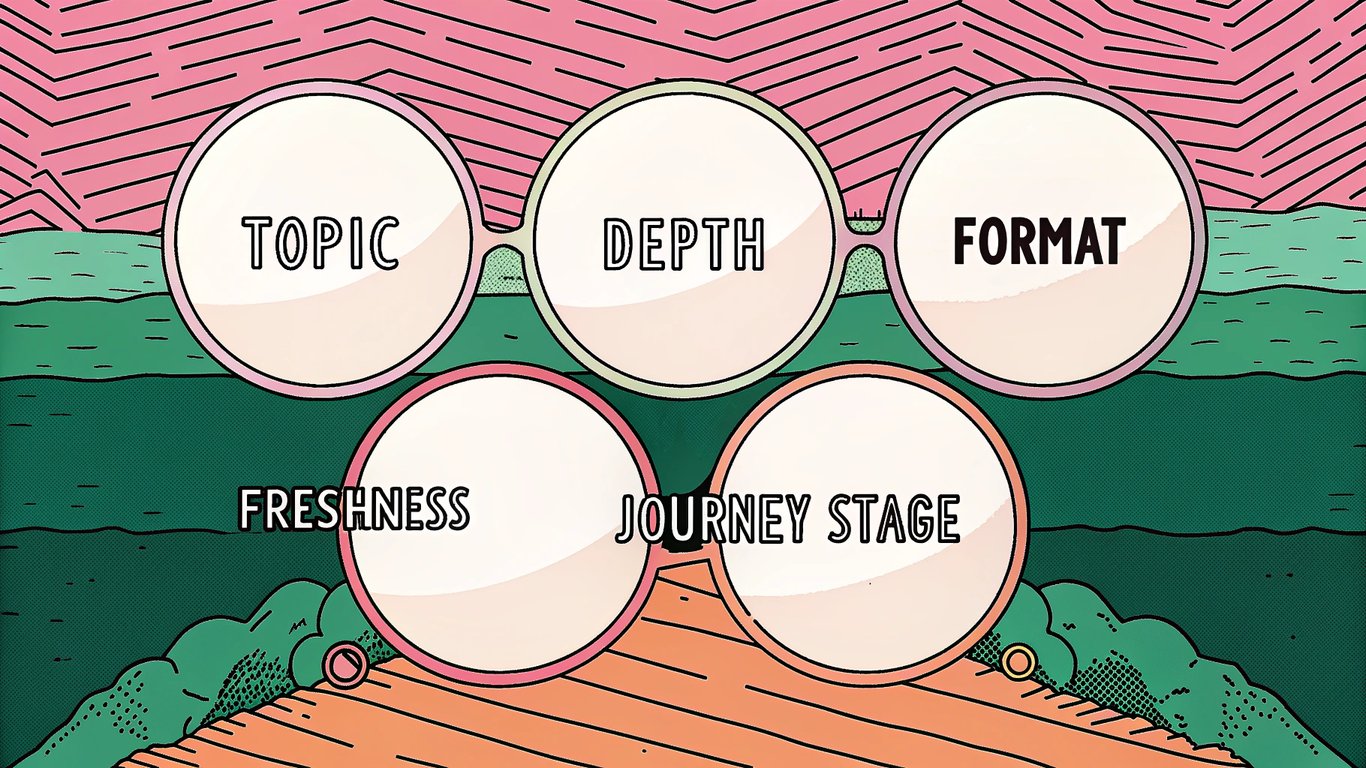
Not all content gaps are created equal. If you want to actually fix them, you need to know what kind you're dealing with. Here are the five main types, with real-world examples to make them stick. Modern AI tools like RepublishAI's Atlas AI Agent can scan top-ranking content and flag these gap types automatically, which saves a ton of time (and guesswork) during your content audit.
- Topic gaps: These are subjects your audience cares about, but you haven't covered at all. For example, if you run a fitness blog and never mention "HIIT workouts for beginners," that's a topic gap. Your competitors might have full guides, while your site is silent.
- Depth gaps: You touch on a topic, but only at the surface level. Maybe you have a post on "content marketing" but skip advanced tactics, case studies, or actionable frameworks. Readers (and Google) notice when your coverage is thin compared to others.
- Format gaps: Sometimes, it's not what you say, but how you say it. If your competitors have videos, infographics, or podcasts on a topic and you only have text, that's a format gap. For instance, a "how-to" guide with no step-by-step video or visual walkthrough can leave users wanting more.
- Freshness gaps: Outdated info is a silent killer. If your "best SEO tools" list hasn't been updated in two years, but others refresh theirs every quarter, you're falling behind. Search engines and users both prefer up-to-date content.
- Journey stage gaps: This one's huge and often ignored. If you only create content for people ready to buy, but skip awareness or consideration topics, you're missing out. For example, a SaaS company with lots of product pages but no "what is [problem]?" or "how to choose a solution" content is leaving gaps at the top and middle of the funnel.
Spotting these gaps isn't just about keeping up with competitors. It's about actually serving your audience at every stage, in every format, and with the depth they expect. If you want to build a content strategy that lasts, you need to look beyond keywords and start thinking about the full spectrum of content opportunities. AI-powered tools can help, but nothing beats a sharp eye and a willingness to ask, "What are we missing?"
Why Content Gap Analysis Matters for SEO (The Business Case)
Every time you miss a content gap, you hand over organic search traffic to your competitors. It’s that simple. If your site doesn’t answer a question or cover a topic, someone else will. And Google’s not shy about sending searchers to whoever does the best job. That means every unfilled gap is a lost opportunity for your brand—lost clicks, lost leads, and, ultimately, lost revenue.
I’ve seen this play out over and over. You pour hours into content, but if you’re not targeting the right gaps, your organic search rankings just stall. Meanwhile, your competitors quietly scoop up the traffic you could have had. It’s a tough pill to swallow, but it’s also a huge opportunity if you know how to spot and fill those gaps.
How Content Gaps Impact Your Search Rankings
Search engines like Google reward sites that deliver the most complete, relevant answers for a given search intent. If your content only scratches the surface or skips key subtopics, Google’s algorithm will notice. It’ll favor pages that go deeper, answer more questions, and match what searchers actually want. That’s why content optimization isn’t just about keywords—it’s about truly serving the user’s needs.
When you leave content gaps, you’re basically telling Google, “Hey, my site isn’t the best resource for this.” So Google sends that traffic elsewhere. And it’s not just about missing a few clicks. Over time, these gaps add up, dragging down your overall content performance and making it harder to build topical authority in your niche.

Here’s another angle: inbound marketing leads (the kind you get from organic search) cost 61% less than outbound leads, according to HubSpot’s research. So every time you let a content gap linger, you’re not just losing traffic—you’re paying more to acquire customers through other channels. That’s a real hit to your bottom line.
If you want to compete for the best ranking opportunities, you need a SEO content strategy that systematically finds and fills these gaps. Otherwise, you’re just spinning your wheels while others pull ahead.
The ROI of Filling Content Gaps: Real Numbers
So what do you actually get when you close those gaps? The results can be dramatic. I’ve seen sites double their organic traffic in a matter of months just by targeting the right missing topics. But it’s not just about more visitors. Filling content gaps improves your conversion rates, lowers your customer acquisition costs, and helps you build a reputation as the go-to resource in your space.
- Increased organic traffic – More pages ranking for more keywords means more people find you.
- Higher conversion rates – When your content matches search intent, visitors are more likely to take action.
- Reduced customer acquisition costs – Organic leads are cheaper than paid or outbound leads.
- Improved topical authority – Covering every angle of a topic signals to Google that you’re an expert.
- Longer content lifespan – Comprehensive, evergreen content keeps performing for years.
Let’s put some numbers to it. Here’s a hypothetical (but realistic) look at what happens when a site runs a thorough content gap analysis and acts on it:
Metric | Before Gap Analysis | After Gap Analysis | Improvement |
|---|---|---|---|
Organic Traffic | 10,000/month | 16,500/month | +65% |
Ranking Keywords | 320 | 540 | +69% |
Average Position | 18.2 | 11.4 | +37% |
Conversion Rate | 1.8% | 2.7% | +50% |
These aren’t pie-in-the-sky numbers. They’re based on what many sites see after a focused effort to fill content gaps. If you want more proof, check out Search Engine Journal's content gap research for real-world case studies and data.
The bottom line? Content gap analysis isn’t just a nice-to-have. It’s a core part of any SEO content strategy that actually moves the needle. If you’re serious about content performance and organic search rankings, you can’t afford to ignore it. Next, I’ll break down the exact methods you can use to identify and close those gaps—so you can start seeing these kinds of results for yourself.
4 Proven Methods to Identify Content Gaps
If you want to outrank competitors and actually serve your audience, you need a system for finding what your content is missing. This is where content gap analysis gets real. There’s no single magic trick. Instead, the best results come from using a mix of methods—each one shines a light on different blind spots. I’ve spent years running content audits, mapping search intent, and digging through competitor content. Here’s what actually works in the field. These four methods are the backbone of any serious SEO content strategy. Use them together, and you’ll spot opportunities your rivals miss.
Method 1: Competitor Content Analysis (The Foundation)
Competitor content analysis is the classic starting point for any content gap project. Why? Because your competitors are already ranking for the keywords and topics you want. If you can see what they’re doing—and what you’re not—you’ll find gaps you can fill. This isn’t just about copying. It’s about understanding where you’re falling short and where you can leap ahead. Tools like Ahrefs Content Gap and SEMrush make this process a lot faster. And with AI-powered solutions, you can automate much of the heavy lifting, letting you focus on strategy instead of spreadsheets.
- Identify your 3-5 main competitors. These should be sites that consistently outrank you for your target keywords, not just the biggest names in your industry.
- Gather a list of their top-performing content. Use tools like Ahrefs, SEMrush, or Moz to pull their highest-traffic pages and best-ranking articles.
- Compare their content inventory to yours. List out the topics, formats, and keyword clusters they cover that you don’t. Pay attention to both broad topics and specific subtopics.
- Spot areas where their coverage is deeper or more comprehensive. Sometimes you have a page on the same topic, but theirs is longer, more up-to-date, or better structured.
- Document all gaps and opportunities. Create a spreadsheet or use a project management tool to track missing topics, weak pages, and potential upgrades.
- Prioritize gaps based on search intent and business value. Not every gap is worth filling. Focus on those that align with your goals and audience needs.
- Leverage automation where possible. AI-powered tools can scan thousands of pages and surface patterns you’d miss manually. This is especially useful for large sites or when you’re short on time.
This method is the backbone of competitive analysis. It’s not just about keywords—it’s about understanding the full scope of what your audience wants and what your competitors are delivering. If you want a deep dive, check out the Ahrefs content gap tutorial for a tool-specific walkthrough. And if you’re looking for a broader toolkit, see our SEO content tools guide.
Method 2: SERP Analysis and Search Intent Mapping
SERP analysis is about studying what Google actually shows for your target keywords. The first page is a cheat sheet for what works. But it’s not just about who’s ranking—it’s about why. What types of content are there? What questions are being answered? What’s missing? This is where mapping search intent comes in. Every query has an intent: informational (looking for answers), navigational (finding a site), commercial (researching products), or transactional (ready to buy). If your content doesn’t match the dominant intent, you’ll struggle to rank—no matter how good it is.
- Search your target keyword in Google (incognito mode). This avoids personalized results and gives you a clean view of the SERP.
- List the top 10 organic results. Note the type of content (blog post, product page, video, etc.), the angle, and the depth.
- Analyze the common elements. Are there recurring subtopics, formats, or features (like tables, infographics, or FAQs)?
- Spot what’s missing. Is there a question nobody answers? A format nobody uses? A perspective that’s ignored?
- Map each result to search intent. Decide if the page is informational, navigational, commercial, or transactional. This helps you see if your content matches what Google wants.
- Document gaps and opportunities. Add these to your content gap spreadsheet or project tracker.
Don’t skip the People Also Ask (PAA) box. This section is a goldmine for content gap discovery. Google surfaces real questions users are asking—often ones that aren’t fully answered by the top results. If you see a question in PAA that isn’t covered on your site, that’s a gap. And if you notice a pattern (like lots of questions about pricing, features, or comparisons), you’ve just found a cluster of topics to target. SERP analysis isn’t just for SEO pros. Anyone can do it, and it’s one of the fastest ways to spot low-hanging fruit.
Method 3: Audience Research and Question Mining
Sometimes the best content gaps aren’t obvious from competitor research or SERPs. They come straight from your audience. Real people ask real questions—often in places you’re not looking. Mining these questions gives you a direct line to what your readers, customers, or prospects actually want to know. This is where you find the stuff that’s missing from everyone else’s content. It’s also how you build trust and authority, because you’re answering the questions that matter most.
- Customer support tickets and live chat logs. These are packed with pain points, confusion, and feature requests.
- Social media comments and DMs. Twitter, LinkedIn, Facebook, and Instagram are full of questions—especially on your own posts.
- Online forums and communities. Reddit, Quora, and niche forums are where people go when they can’t find answers elsewhere.
- Product reviews and testimonials. Look for recurring themes, complaints, or praise. What do people wish your product or service did?
- Sales team feedback and call notes. Your sales reps hear objections and questions every day. Ask them what prospects are confused about or want to know.
You don’t need fancy software for this—just curiosity and a willingness to listen. But if you want to scale it, there are tools that scrape forums, aggregate reviews, and analyze social chatter. The key is to look for patterns. If you see the same question pop up in three different places, that’s a content gap worth filling. And don’t forget to check your own analytics for on-site search queries. Sometimes your visitors are literally telling you what they can’t find.
Method 4: Your Own Content Audit
A content audit is your chance to look in the mirror. It’s not just about what you have—it’s about what you’re missing, what’s outdated, and what’s underperforming. This is where you find depth gaps (thin coverage), freshness gaps (old info), and performance gaps (pages that don’t rank or convert). A good audit is the difference between guessing and knowing. It’s also the only way to spot internal cannibalization—when multiple pages compete for the same keyword and drag each other down.
- Export your full content inventory. Use your CMS, Google Analytics, or a crawler like Screaming Frog to get a list of every page, post, and resource.
- Tag each piece by topic, format, and funnel stage. This helps you see where you have clusters and where you have holes.
- Review performance metrics. Look at organic traffic, ranking keywords, bounce rate, time on page, and conversions. Flag underperformers.
- Check for depth and freshness gaps. Is the content comprehensive? Is it up to date? Does it answer all the key questions?
- Identify cannibalization and overlap. Are multiple pages targeting the same keyword? If so, consider merging or consolidating.
- Document all gaps and opportunities. Add these to your master gap list, along with notes on priority and potential impact.
A thorough content audit takes time, but it’s worth every minute. You’ll uncover quick wins (like updating an old post) and big projects (like creating a new topic cluster). If you’re managing a large site, automation is your friend. Some AI-powered tools can scan your entire site, flag outdated content, and even suggest what to update or merge. But even a manual audit, done right, will reveal more opportunities than most people expect.
Each of these four methods—competitor content analysis, SERP analysis, audience research, and content audit—brings a different perspective. Use them together, and you’ll build a content strategy that’s actually based on what people want and what Google rewards. If you want to go deeper on tools, check out our SEO content tools guide. And for a hands-on walkthrough of competitor analysis, the Ahrefs content gap tutorial is a solid place to start.
How to Prioritize and Fill Content Gaps (The Action Plan)
Spotting a content gap is just the start. The real difference comes from what you do next. If you don't have a plan for which gaps to tackle first, or how to actually fill them, you'll end up spinning your wheels. Prioritization and execution are what separate a smart SEO content strategy from a random collection of blog posts. This is where most teams get stuck. But with a clear framework, you can turn those gaps into ranking opportunities that actually move the needle for your business.
The Content Gap Prioritization Framework
Not every content gap is worth your time. Some are low-hanging fruit, others are resource hogs with little payoff. You need a way to score and sort them. Here’s a simple framework I use with clients and teams. It’s based on four factors that matter for content planning and content optimization:
- Search volume/demand – How many people are actually searching for this topic or question?
- Competition level – How tough is it to rank for this gap? Are the top results big brands or weak content?
- Business relevance – Does this gap align with your products, services, or core audience needs?
- Resource requirements – How much time, budget, or expertise will it take to fill this gap well?
Score each gap on a scale of 1-10 for each factor. Then multiply by a weight (if some factors matter more to you). Here’s how it looks in practice:
Factor | Low Score (1-3) | Medium Score (4-6) | High Score (7-10) | Weight Multiplier |
|---|---|---|---|---|
Search volume/demand | Few monthly searches | Moderate search interest | High search demand | x2 |
Competition level | Very competitive | Mixed competition | Low competition | x1.5 |
Business relevance | Tangential to business | Somewhat relevant | Directly tied to business goals | x2 |
Resource requirements | High effort/cost | Moderate effort | Low effort/quick win | x1 |
Add up the weighted scores for each gap. The higher the total, the higher it should be on your editorial calendar. This approach keeps your content marketing strategy focused on what actually drives content performance, not just what feels urgent.
Creating High-Quality Content That Fills Gaps
Filling a content gap isn’t about churning out another 500-word post. Google’s gotten way too smart for that. You need to create something that’s more useful, more comprehensive, and more relevant than what’s already out there. Here’s a step-by-step process I recommend for competitive topics:
- Research the top-ranking content for your target keyword or topic. Look at the first page of Google, but also check what’s ranking in "People Also Ask" and related searches.
- Identify the specific elements those pages include: subtopics, FAQs, data, visuals, expert opinions, and unique angles.
- Create a comprehensive outline that covers all the must-have sections and adds something new. Don’t just copy what’s out there—find the gaps in their coverage.
- Write in-depth content. For most competitive topics, aim for a minimum of 2025 words. This gives you room to cover subtopics, answer related questions, and add value.
- Optimize for on-page SEO: use keyword-rich headers, include semantic keywords, and make sure your content is easy to scan. Address related questions and subtopics in their own sections.
- Add unique value. This could be original research, expert quotes, better examples, or a more actionable approach. If you can make your content the best answer on the web, you’ll win rankings and trust.
To truly fill a content gap, you need to go beyond the basics. Use keyword-rich headers (H2s and H3s) that match what people are searching for. Cover every angle of the topic, not just the main question. And don’t forget to answer related questions—Google’s "People Also Ask" box is a goldmine for this. If you want a deeper dive into writing for SEO, check out the SEO content writing guide.
Measuring Success: KPIs for Gap-Filling Content
You can’t improve what you don’t measure. After you publish new or updated content, track these KPIs to see if you’re actually closing the gap and boosting your content performance:
- Ranking position changes for your target keywords (are you moving up in Google?)
- Organic traffic growth to the new or refreshed page
- Engagement metrics like time on page and bounce rate (are people sticking around?)
- Conversion rates (are readers taking the next step you want, like signing up or buying?)
- Backlinks earned from other sites (a sign your content is seen as authoritative)
- Featured snippet captures (is your content being pulled into Google’s answer boxes?)
If you’re not seeing improvement in at least a few of these areas after a few months, it’s time to revisit your approach. Sometimes you need to update the content again, add new sections, or promote it more aggressively. For tips on keeping your content fresh and competitive, see the content refresh guide.
Common Mistakes to Avoid
Even experienced teams fall into these traps. Avoiding them will save you a ton of wasted effort and help your content marketing strategy actually deliver results:
- Creating thin content that doesn’t truly fill the gap (Google can spot this a mile away)
- Ignoring search intent—writing what you want, not what your audience is actually looking for
- Failing to update old content, so it gets stale and loses rankings
- Not promoting your new gap-filling content (even the best post needs some push to get noticed)
- Treating content gap analysis as a one-time project instead of an ongoing part of your editorial calendar and content planning
Prioritizing and filling content gaps isn’t a set-it-and-forget-it deal. The best teams revisit their gap analysis regularly, update their content, and keep an eye on new ranking opportunities as search trends shift. Next up, I’ll show you how to turn this process into a repeatable system for long-term growth.
Conclusion: Turn Content Gaps Into Growth Opportunities
Content gaps are where your audience is searching for answers and coming up empty. That’s the real opportunity. If you’re serious about building a strong content marketing strategy or boosting your SEO content strategy, you can’t afford to ignore these blind spots. The four methods we covered—competitor analysis, SERP analysis, audience research, and content audit—aren’t just theory. They’re practical ways to spot exactly where your site is missing out on organic search rankings and real engagement.
But here’s the thing: filling gaps isn’t about churning out more posts or chasing every trending keyword. It’s about creating the right content. That means content that actually answers what people are searching for, matches their intent, and offers something better than what’s already out there. If you focus on content optimization and quality over quantity, you’ll see the difference—not just in rankings, but in how your audience responds.
This isn’t a one-and-done project. Search trends shift, competitors update their strategies, and what worked last year might not cut it now. The best approach? Pick one method and start today. Audit your top 10 pages for depth gaps, or take a close look at a competitor’s content strategy. Even a small step can reveal big opportunities.
When you treat content gap analysis as an ongoing habit, you move from guesswork to a data-driven system that fuels sustainable growth. That’s how you turn missed opportunities into real wins. If you want to take your strategy even further, check out the AI content strategy framework for a deeper dive into building a future-proof plan.