

You've finally got budget approval to triple your content output. Your boss wants more blog posts, more social content, more everything. But here's the problem: your current process barely works at current volume.
Most content teams hit a wall when they try to scale. Quality drops. Brand voice becomes inconsistent. SEO performance suffers because nobody has time to optimize properly anymore.
I've seen this pattern repeatedly with growing businesses. They hire more writers, pump out more content, and watch their engagement rates plummet. The content feels generic. Search rankings stagnate despite publishing three times as much.
Why Traditional Content Production Breaks at Scale
Traditional content workflows rely heavily on manual oversight. One editor reviews everything. One SEO specialist checks all the optimization. One brand manager ensures voice consistency.

This works fine when you're publishing five articles per month. But at fifteen or twenty articles? Those bottlenecks become crushing. Your editor becomes a traffic cop instead of a quality guardian. Important details slip through because there's simply too much to review.
The real issue isn't just volume. It's that most teams lack documented processes. Knowledge lives in people's heads. When you add new writers or freelancers, they don't know your brand voice. They don't understand your SEO requirements. Every piece needs extensive revision.
What This Guide Will Help You Achieve
This article breaks down eight specific approaches to content scaling that actually work. You'll learn how to increase output without sacrificing the things that make your content effective.
We're talking about measurable improvements: cutting production time by 30-40%, maintaining consistent brand voice across distributed teams, and preserving (or improving) your search visibility even as content volume increases.
Way 1: Establish a Documented Content Workflow Framework

Your first step toward content scaling is documenting exactly how content moves from idea to publication. Not the idealized version. The actual process with all its messy handoffs and unclear approval points.
Map Your Current Content Journey
Start by tracking one piece of content through your entire process. Who touches it? Where does it sit waiting for feedback? Which steps take longer than they should?
You'll probably find that content spends more time waiting than being worked on. A writer finishes a draft and waits three days for editorial feedback. The editor sends it to the SEO specialist who's swamped with other projects. Two weeks later, you're rushing to publish something that should've taken five days.
Design Stage-Gate Approval Systems
Stage-gate systems create clear checkpoints where specific people approve specific aspects of content. Brief approval happens before writing starts. Draft review focuses on structure and messaging. Final QA catches technical issues.
The key is making these gates lightweight. You're not adding bureaucracy. You're preventing the bigger problem of major revisions late in the process because stakeholders weren't aligned early.
Create Workflow Templates for Different Content Types
A 3,000-word thought leadership article needs a different workflow than a 500-word product update. Build distinct templates that reflect realistic timelines and appropriate stakeholders for each content type.
Your blog post workflow might include: brief creation (1 day), writing (2 days), editorial review (1 day), SEO optimization (1 day), final approval (1 day). Social content might compress this to hours instead of days.
Tools and Platforms for Workflow Management
You need software that can handle content-specific workflows. Asana and Monday.com work well for many teams. Airtable offers more flexibility if you want custom fields for SEO data or brand voice scores.
The platform matters less than actually using it consistently. Pick something your team will actually adopt, not the most feature-rich option.
Way 2: Define Clear Roles and Responsibilities with RACI Models
Unclear roles kill content velocity. When nobody knows who's supposed to approve what, everything slows down. People either duplicate work or assume someone else is handling critical tasks.

Essential Roles in a Scalable Content Operation
At minimum, you need distinct roles for strategy, creation, editing, and optimization. Content strategists decide what to create and why. Writers produce drafts. Editors ensure quality and consistency. SEO specialists handle technical optimization.
Smaller teams often combine roles. One person might handle both editing and brand voice. That's fine initially, but you'll need to separate these functions as volume increases.
Implementing RACI Matrices for Content Projects
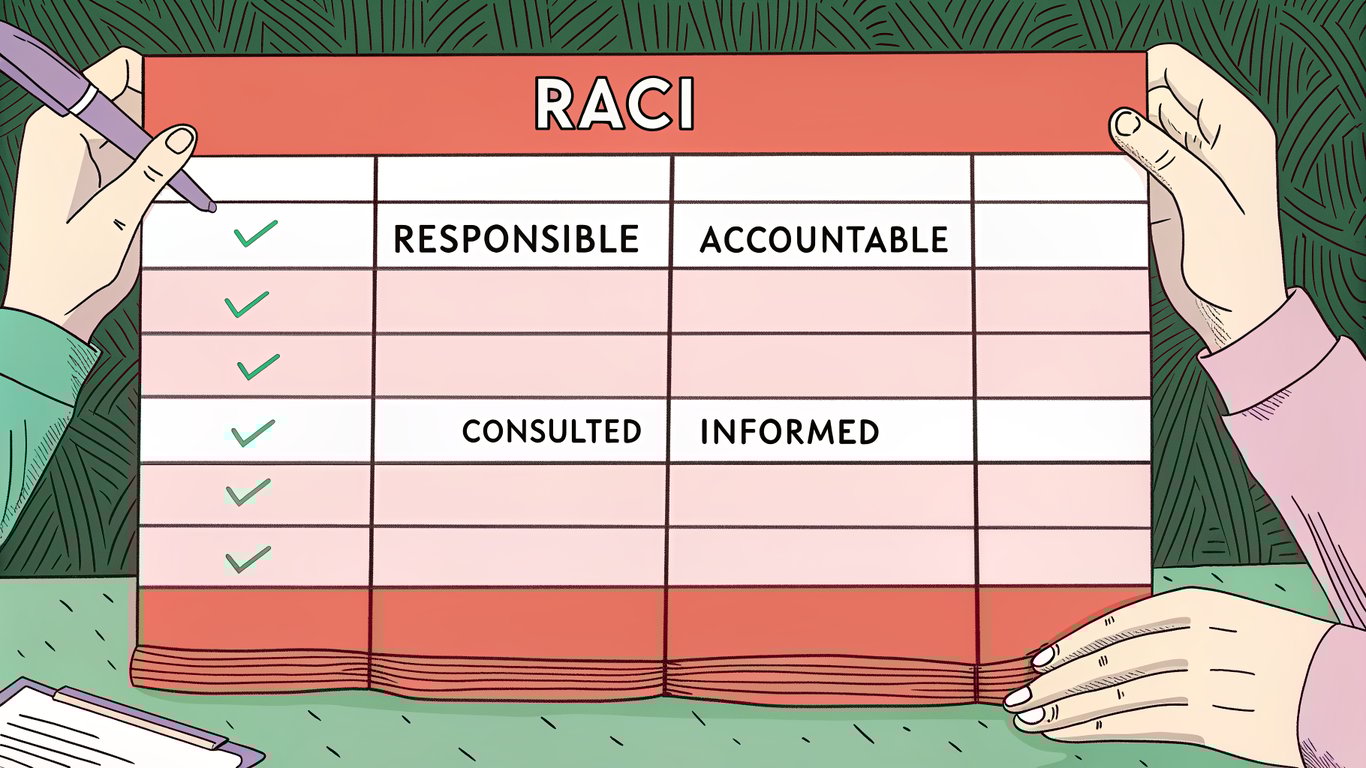
RACI stands for Responsible, Accountable, Consulted, and Informed. For each task in your workflow, assign these roles explicitly.
Example: For draft creation, the writer is Responsible. The managing editor is Accountable. The SEO specialist is Consulted. The content strategist is Informed. This clarity eliminates the "I thought you were handling that" conversations.
Scaling with Specialists vs. Generalists
Early-stage content scaling often works better with generalists who can wear multiple hats. But as you approach 50+ pieces per month, specialists become more efficient.
A dedicated SEO specialist can optimize content faster than a writer who also does SEO sometimes. A brand voice editor who reviews nothing but voice consistency catches issues that generalist editors miss.
Building Effective Freelancer and Agency Partnerships
External contributors are essential for content scaling. But they need the same clear documentation and workflows as internal team members.
Create a freelancer onboarding package that includes your brand voice guide, SEO requirements, and workflow expectations. The upfront investment pays off when freelancers submit drafts that need minimal revision.
Way 3: Create Comprehensive Brand Voice Guidelines and Style Documentation
Brand voice consistency is probably the hardest thing to maintain when scaling. You can't just tell writers to "sound like us." They need concrete examples and specific guidance.
Building a Brand Voice Chart with Examples
A brand voice chart defines your tone across multiple dimensions. Are you formal or casual? Serious or playful? Expert or approachable? Most brands fall somewhere in the middle on each spectrum.
The critical part is showing examples. Don't just say "be conversational." Show a paragraph written in your voice next to one that's too formal or too casual. Writers learn faster from examples than from abstract descriptions.
Developing Content Templates and Frameworks
Templates embed brand voice into structure. Your how-to article template might start with a relatable problem statement, include specific examples throughout, and end with actionable next steps. This framework naturally produces content that sounds like your brand.
Create templates for your most common content types: product announcements, thought leadership pieces, how-to guides, case studies. Each template should include structural guidance and voice examples.
Creating a Living Style Guide
Your style guide needs to be searchable and easy to update. A PDF that lives on someone's hard drive doesn't work. Use a wiki, a Notion page, or a dedicated style guide platform.
Add to it whenever you encounter edge cases. How do you handle competitor mentions? What's your stance on industry jargon? Do you use Oxford commas? Document these decisions as they come up.
Training Programs for Brand Voice Consistency
New writers need hands-on training, not just documentation. Have them rewrite sample paragraphs in your brand voice. Review their first few pieces with detailed feedback focused specifically on voice.
This investment pays off quickly. Writers who understand your voice from the start need less revision, which means faster production and lower editing burden.
Way 4: Implement Automated Quality Checks and Content Scoring Systems
You can't manually check every detail on every piece when you're producing high volumes. Automation catches the routine stuff so humans can focus on strategic quality issues.
Setting Up Automated Readability and Grammar Checks
Tools like Grammarly or Hemingway Editor catch basic errors automatically. Configure them to flag content that exceeds your target reading level or contains common mistakes.
These tools aren't perfect. They'll suggest changes that don't fit your brand voice. But they catch the obvious stuff so editors can focus on higher-level issues.
Building Custom Quality Scorecards
Create a weighted scoring system that evaluates content against your specific quality criteria. Maybe SEO optimization is worth 30 points, brand voice is 25 points, readability is 20 points, and so on.
Set a minimum passing score. Content below that threshold goes back for revision before publication. This creates objective quality standards instead of subjective "this feels off" feedback.
Automated Brand Voice Detection Tools
Some AI tools can now analyze content against your brand voice examples and flag deviations. They're not perfect, but they're getting better at catching generic corporate speak or overly casual language that doesn't match your style.
These tools work best as a first-pass filter. They catch obvious mismatches so human editors can focus on subtle voice issues.
Integration Points in Your Workflow
Run automated checks right after the writer submits their draft. This gives them immediate feedback before the piece enters editorial review. Writers learn faster when they see patterns in what gets flagged.
Don't automate everything. Some quality aspects require human judgment. Use automation to handle the mechanical stuff so humans can focus on strategic decisions.
Way 5: Deploy SEO Automation While Maintaining Strategic Oversight
Effective SEO at scale requires automation. You can't manually research keywords and optimize every element for dozens of articles per month. But you also can't just let automation run wild without strategic direction.
Automated Keyword Research and Clustering
Tools like Ahrefs or Semrush can identify hundreds of keyword opportunities quickly. The trick is organizing them into logical topic clusters that align with your content strategy.
Automated clustering groups related keywords together. Instead of creating fifty separate articles targeting similar terms, you create comprehensive pieces that target entire topic clusters.
On-Page SEO Checklists and Automated Audits
Create a checklist of technical SEO requirements: meta description length, header hierarchy, image alt text, internal linking. Many content management systems can automatically flag missing elements.
This prevents the common problem where content gets published without proper optimization because everyone assumed someone else checked it.
Content Brief Generation with SEO Parameters
Automated brief generation pulls together keyword data, competitor analysis, and search intent into a structured document for writers. This ensures every piece starts with solid SEO foundation.
The brief should include target keywords, recommended word count, questions to answer, and examples of top-ranking content. Writers get clear direction without needing to do their own SEO research.
Monitoring and Maintaining SEO Performance at Scale
Set up dashboards that track how your scaled content performs in search. Which topics are gaining traction? Which pieces need optimization updates? You need visibility into performance patterns, not just individual article metrics.
Automated alerts can flag when content drops in rankings or when new keyword opportunities emerge. This lets you maintain SEO performance proactively instead of reactively.
Way 6: Leverage AI Content Tools with Human-in-the-Loop Processes
AI tools can accelerate content production significantly. But using them effectively requires understanding where they add value and where human oversight is essential.
Identifying High-Value AI Use Cases in Content Production
AI works well for generating outlines, creating first drafts of straightforward content, writing meta descriptions, and producing content variations. It's less effective for thought leadership, nuanced analysis, or anything requiring genuine expertise.
Use AI to handle the mechanical parts of content creation. Let humans focus on the strategic and creative aspects that require judgment and experience.
Training AI Tools on Your Brand Voice
Feed AI tools examples of your best content. Many platforms let you create custom instructions or fine-tune outputs based on your style. The more examples you provide, the better the AI matches your voice.
This isn't perfect. AI will still produce generic phrases and awkward constructions. But training reduces how much editing is needed to bring AI-generated content up to your standards.
The Human-in-the-Loop Editorial Model
AI generates a draft. A human editor reviews for accuracy, brand voice, and strategic messaging. Another human fact-checks claims and adds expertise. This human-in-the-loop editorial model is faster than writing from scratch while maintaining quality.
The key is treating AI output as a starting point, not a finished product. Editors need time to substantially revise and improve AI-generated content.
Quality Control for AI-Assisted Content
AI-generated content needs extra scrutiny for factual accuracy. AI tools sometimes make up statistics or misrepresent information. Every factual claim needs verification.
Also watch for generic phrasing that sounds like every other AI-generated article. If your content could've been written by anyone about anything, it needs more human refinement.
Way 7: Build Content Repurposing and Atomization Systems
Creating one piece of content and systematically breaking it into multiple formats multiplies your output without proportionally increasing effort. This is probably the most underutilized content scaling strategy.
The Content Atomization Framework
Start with a comprehensive pillar piece. Then systematically extract derivative assets: social media posts highlighting key points, infographics visualizing data, short video clips explaining concepts, email newsletter segments.
One 2,000-word article might generate ten social posts, two infographics, three short videos, and four email segments. That's eighteen additional assets from one source piece.
Automated Repurposing Workflows
Create templates for each derivative format. When a pillar article publishes, your workflow automatically generates tasks to create social posts, design infographics, and produce other formats.
This systematization ensures repurposing actually happens instead of being a good idea that never gets executed.
Maintaining Brand Voice Across Formats and Channels
Different platforms require different tones, but your core brand voice should remain consistent. A LinkedIn post might be more professional than a Twitter thread, but both should sound like your brand.
Create platform-specific voice guidelines that show how to adapt your core voice for each channel while maintaining consistency.
Tracking Performance of Repurposed Content
Not all repurposing strategies deliver equal value. Track which formats and channels generate the most engagement. Maybe your infographics perform great on LinkedIn but flop on Twitter. Double down on what works.
This data helps you refine your repurposing strategy over time, focusing effort on high-impact formats.
Way 8: Establish Continuous Improvement Through Data and Feedback Loops
Content scaling isn't a one-time project. It's an ongoing process of measurement, feedback, and refinement. The systems you build need to evolve as your needs change.
Key Metrics for Scaled Content Operations
Track production velocity (time from brief to publication), quality scores, SEO performance (rankings and traffic), engagement rates, and cost per asset. These metrics tell you whether scaling is actually working.
Watch for warning signs: declining engagement despite increased volume, dropping search rankings, or rising revision rates. These indicate your scaling approach needs adjustment.
Building Feedback Mechanisms into Workflows
Create structured ways for team members to suggest improvements. Maybe editors notice that certain brief formats lead to better first drafts. Writers might identify workflow bottlenecks. Capture this feedback systematically.
Regular retrospectives (monthly or quarterly) give teams space to discuss what's working and what needs to change.
Regular Content Audits and Quality Reviews
Sample published content regularly to ensure quality standards are maintained. Review a random selection of recent articles against your quality scorecard. Are standards slipping as volume increases?
These audits catch quality degradation early, before it becomes a systemic problem.
Iterating Your Scaling Strategy
Schedule quarterly reviews of your entire content scaling approach. What's working? What's not? Do you need different tools? Should you adjust team structure? Are your workflows still appropriate for current volume?
Content scaling is dynamic. The systems that work at 20 articles per month might not work at 50. Stay flexible and willing to evolve your approach.
Your Roadmap to Sustainable Content Scaling
Scaling content production successfully requires balancing automation with human creativity. You need systems and processes, but not so much that they stifle the strategic thinking and expertise that makes content valuable.
Prioritizing Your Implementation
Don't try to implement all eight approaches simultaneously. Start with your biggest pain point. If brand voice consistency is your main issue, focus on documentation and training first. If bottlenecks are killing velocity, fix your workflows.
Most teams see the best results by starting with workflow documentation and role clarity (Ways 1 and 2), then adding quality automation (Way 4), and finally incorporating AI tools (Way 6) once the foundation is solid.
Avoiding Common Scaling Pitfalls
The biggest mistake is prioritizing quantity over quality. More content that nobody reads doesn't help your business. Maintain quality standards even if it means slower scaling initially.
Another common error is over-automating too quickly. Automation should support human expertise, not replace it. Keep humans in the loop for strategic decisions and quality oversight.
Finally, don't neglect brand voice in the rush to scale. Generic content might fill your editorial calendar, but it won't build the audience connection that drives business results.
Measuring Success in Your Content Scaling Journey
Success looks different for every organization, but generally you want to see increased output without proportional increases in cost or time. If you're producing twice as much content with only 30% more resources, your scaling is working.
Quality metrics should remain stable or improve. If engagement rates drop or SEO performance declines, you're scaling wrong. The goal is more good content, not just more content.
Track these benchmarks quarterly. Sustainable content scaling is a marathon, not a sprint. Build systems that can grow with your business for years, not just solve immediate capacity problems.