

Search rankings change constantly. One day you're on page one, the next you've dropped to page three. Without proper tracking, you're flying blind.
The rank tracking market has exploded over the past few years. What used to be simple position monitoring has evolved into comprehensive SEO platforms with keyword research, competitor analysis, and backlink monitoring all rolled into one. This means you've got more options than ever, but it also makes choosing the right tool more complicated.

I've tested dozens of rank trackers over the years, and honestly, there's no single "best" option. The right choice depends entirely on your specific needs, whether you're running an agency, managing an in-house team, or working solo.
The Current State of Rank Tracking in 2025
Rank tracking isn't what it used to be. Google's search results have become increasingly personalized and location-specific. The same query can show completely different results depending on where you're searching from, what device you're using, and even your search history.
Modern rank trackers need to account for all these variables. They track mobile versus desktop rankings separately, monitor local search results for specific cities or regions, and even track SERP features like featured snippets and local packs. Some tools now incorporate AI to predict ranking trends and suggest optimization opportunities.

The best rank tracking software in 2025 goes beyond simple position monitoring. It provides context around your rankings, shows you what competitors are doing, and helps you understand why your rankings changed, not just that they did.
Key Factors to Consider When Choosing Rank Tracking Software
Before we get into specific tools, let's talk about what actually matters when evaluating rank trackers.
Accuracy is obviously critical. A rank tracker that shows you're ranking #3 when you're actually #8 is worse than useless. Most reputable tools are pretty accurate these days, but there can be variations in how they handle personalized results and local searches.
Pricing structure varies wildly. Some tools charge per keyword tracked, others per project or domain. Some offer unlimited keyword tracking with a one-time purchase, while others require monthly subscriptions. You need to calculate the actual cost based on how many keywords you plan to track.
Update frequency matters if you need real-time data. Some tools update rankings daily, others offer on-demand updates, and some only refresh weekly. For most people, daily updates are sufficient, but agencies might need faster refresh rates.
Integration capabilities can save you tons of time. If your rank tracker connects with Google Analytics, Google Search Console, or your reporting tools, you can build comprehensive dashboards without manual data exports.
What Makes These Alternatives Stand Out
The seven tools we're covering represent different approaches to rank tracking. Some are all-in-one SEO platforms where rank tracking is just one feature among many. Others are specialized rank trackers that do one thing exceptionally well.
You'll find options for every budget, from affordable tools perfect for small businesses to enterprise-grade platforms with advanced features. Some excel at accuracy, others at speed, and a few offer unique capabilities like white-label reporting or unlimited keyword tracking.
Detailed Reviews: 7 Best Rank Tracking Software Alternatives
SE Ranking: Best All-in-One SEO Platform
SE Ranking has built a reputation as a comprehensive SEO platform that doesn't sacrifice quality for breadth. The rank tracking component is accurate and reliable, but you're also getting keyword research, site audits, backlink monitoring, and competitor analysis in one package.
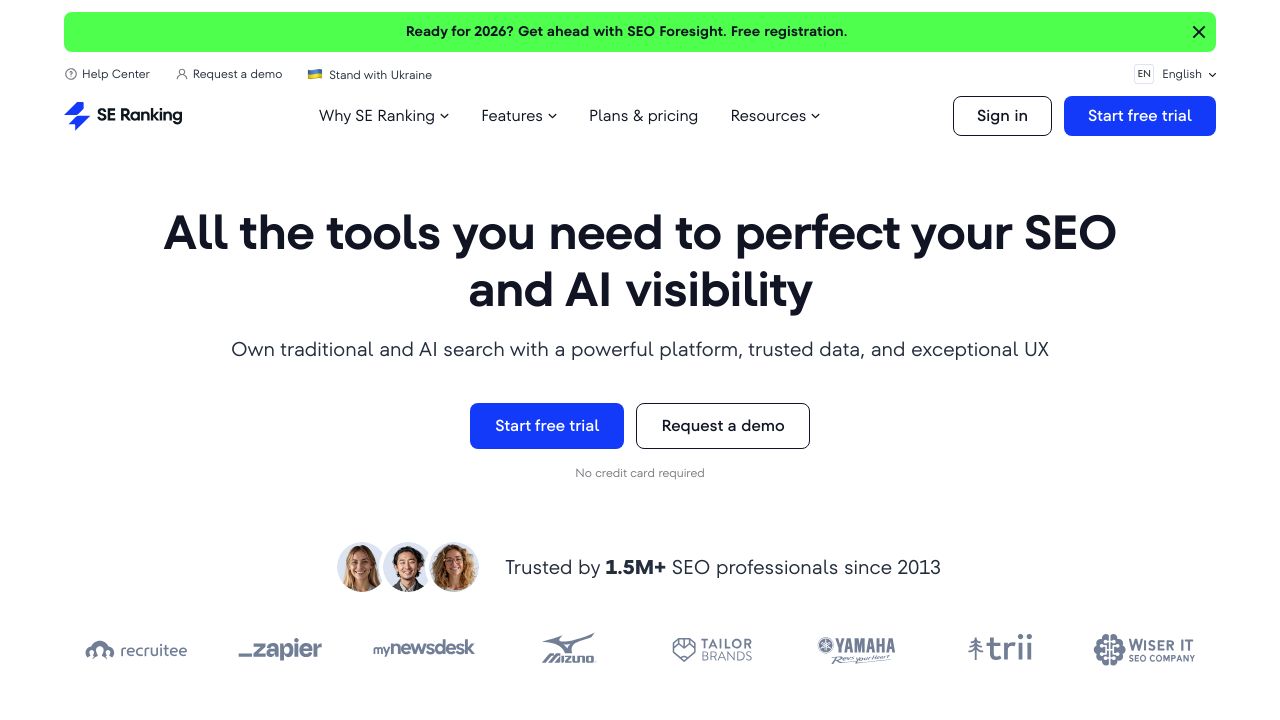
What I appreciate about SE Ranking is how it balances power with usability. The interface isn't overwhelming despite having dozens of features. You can track rankings across multiple search engines including Google, Bing, and Yahoo, with support for both desktop and mobile tracking.
The platform offers flexible tracking frequencies. You can set keywords to update daily, every three days, or weekly depending on your needs and budget. This flexibility helps control costs since more frequent updates consume more credits.
Best for: SEO agencies and consultants who need a full-featured platform with white-label reporting capabilities. The ability to manage multiple client projects from one dashboard makes it particularly valuable for agencies.
Pricing consideration: SE Ranking uses a credit-based system where different features consume different amounts of credits. This can be cost-effective if you use multiple features, but pure rank tracking might be cheaper elsewhere.
Nightwatch: Best for Accuracy and Agency Use
Nightwatch has earned a strong reputation for tracking accuracy. According to industry reviews, it's consistently ranked among the most precise rank trackers available, which matters when you're making strategic decisions based on ranking data.
The tool specializes in local SEO tracking, making it excellent for businesses with multiple locations or agencies managing local clients. You can track rankings for specific cities, regions, or even neighborhoods, which is crucial for local search optimization.
Nightwatch's reporting features are particularly strong. The platform offers customizable white-label reports that you can brand with your agency's logo and colors. Automated report scheduling means clients receive updates without you lifting a finger.
One unique feature is the ability to track SERP features separately. You can monitor when your site appears in featured snippets, local packs, or knowledge panels, giving you a more complete picture of your search visibility beyond traditional rankings.
Best for: Agencies that prioritize accuracy and need robust white-label reporting. Also excellent for businesses focused on local SEO.
Ahrefs: Best for Competitor Analysis
Ahrefs is primarily known for its backlink analysis and keyword research capabilities, but its rank tracking features are solid. The real advantage here is having rank tracking integrated with Ahrefs' massive keyword and backlink databases.

You can track your rankings while simultaneously monitoring competitor rankings for the same keywords. This side-by-side comparison helps you understand the competitive dynamics and identify opportunities where competitors are vulnerable.
The platform's keyword research tools integrate seamlessly with rank tracking. When you discover new keyword opportunities, you can add them to your tracking list with a single click. The historical ranking data Ahrefs provides can show you how rankings have evolved over time.
Best for: SEO professionals who need comprehensive competitor intelligence alongside rank tracking. If you're already using Ahrefs for backlink analysis or keyword research, the integrated rank tracking makes sense.
Limitation: Ahrefs is one of the more expensive options, and you're paying for features beyond rank tracking. If you only need position monitoring, there are more cost-effective alternatives.
Semrush: Best for Enterprise and In-House Teams
Semrush has become the go-to platform for many enterprise SEO teams. The Position Tracking tool is just one component of a massive marketing platform that includes content marketing, social media management, and competitive research.
What sets Semrush apart for larger teams is the collaboration features. Multiple team members can access projects, share reports, and coordinate SEO efforts from a single platform. The permission system lets you control who can view or edit different projects.
The platform tracks rankings daily and provides detailed visibility metrics that go beyond simple position numbers. You can see estimated traffic from rankings, track SERP feature appearances, and monitor ranking volatility to identify algorithm updates.
Integration with other Semrush tools creates powerful workflows. You can identify ranking opportunities through keyword research, track implementation progress through position tracking, and measure traffic impact through analytics integration.
Best for: Enterprise companies and large in-house marketing teams that need a comprehensive platform with strong collaboration features.
Rank Tracker by SEO PowerSuite: Best for Mobile Tracking
Rank Tracker by SEO PowerSuite takes a different approach as desktop software rather than a cloud-based platform. You download and install it on your computer, which has both advantages and limitations.
The biggest advantage is unlimited keyword tracking with the paid version. There's no monthly cap on how many keywords you can monitor, which is huge if you're tracking large keyword portfolios. The one-time pricing model (with annual updates) can be more economical than subscription-based tools over time.
Mobile tracking capabilities are particularly strong. The tool tracks mobile rankings separately from desktop and can monitor rankings across different mobile devices and operating systems. This granular mobile data is valuable as mobile search continues to dominate.
The software supports tracking across 400+ search engines, including international versions of Google and regional search engines. This makes it excellent for businesses operating in multiple countries or targeting non-English markets.
Best for: SEO professionals tracking large numbers of keywords who prefer desktop software and want to avoid recurring subscription costs.
Limitation: Being desktop software means you can't access your data from anywhere. You need to be at your computer to check rankings or generate reports.
Ranktracker: Best Budget-Friendly Option
Ranktracker has gained traction as an affordable alternative that doesn't skimp on essential features. With over 35,000 users, it's proven itself as a reliable option for small businesses and solopreneurs.
The platform tracks rankings across Google, Bing, and Yahoo, with support for both global and local searches. You can monitor rankings for specific cities or regions, which is important for local businesses.
Beyond rank tracking, Ranktracker includes keyword research tools, SERP analysis, and backlink monitoring. Having these features at a lower price point makes it attractive for those just starting with SEO or working with limited budgets.
The interface is straightforward and easy to navigate. You won't find as many advanced features as enterprise platforms, but for basic rank tracking and keyword research, it gets the job done.
Best for: Small businesses, bloggers, and freelancers who need reliable rank tracking without enterprise pricing.
AccuRanker: Best for Speed and Real-Time Data
AccuRanker is built for speed. While most rank trackers update daily, AccuRanker offers on-demand ranking updates. You can refresh your rankings whenever you want and get results in minutes rather than waiting for the next scheduled update.
This speed makes AccuRanker particularly valuable for agencies running SEO campaigns where clients want to see immediate results after optimization work. You can show ranking improvements in real-time rather than asking clients to wait 24 hours for the next update.
The platform's API is robust and well-documented, making it easy to integrate ranking data into custom dashboards or client reporting systems. Many agencies use AccuRanker specifically because of these API capabilities.
AccuRanker tracks rankings with high precision, including monitoring for SERP features and providing detailed visibility metrics. The platform also offers competitor tracking and share of voice analysis to understand your market position.
Best for: Agencies that need fast, on-demand ranking updates and robust API access for custom integrations.
Pricing consideration: The on-demand update feature and API access come at a premium compared to tools with standard daily updates.
Side-by-Side Comparison: Features, Pricing, and Performance
Choosing between these tools becomes easier when you see them compared directly. Let's break down the key differences.
Pricing Comparison Breakdown
Pricing structures vary significantly across these platforms, making direct comparisons tricky. Some charge per keyword, others per domain, and a few offer unlimited tracking.
SE Ranking and Semrush use tiered subscription models where higher plans include more keywords and features. Ahrefs bundles rank tracking with its comprehensive SEO toolkit at a premium price point. Rank Tracker by SEO PowerSuite offers a one-time purchase option that can be more economical long-term.
Ranktracker positions itself as the budget-friendly option with competitive pricing for small businesses. AccuRanker and Nightwatch fall in the mid-to-premium range, justified by their specialized features like on-demand updates and exceptional accuracy.
When evaluating cost, calculate based on your actual needs. If you're tracking 500 keywords, determine the monthly cost for that volume across different platforms. Don't forget to factor in whether you need the additional features each platform offers.
Feature Comparison Matrix
Feature | Best For | Key Strength |
|---|---|---|
SE Ranking | All-in-one needs | Comprehensive SEO platform |
Nightwatch | Accuracy & agencies | Precise local tracking |
Ahrefs | Competitor research | Integrated backlink data |
Semrush | Enterprise teams | Collaboration features |
Rank Tracker | Mobile tracking | Unlimited keywords |
Ranktracker | Budget-conscious | Affordable pricing |
AccuRanker | Real-time data | On-demand updates |
All seven tools track rankings across multiple search engines and support both desktop and mobile monitoring. They all provide historical ranking data and competitor tracking to some degree.
The differences emerge in specialized capabilities. Nightwatch excels at local SEO tracking with granular location options. AccuRanker stands out for speed with on-demand updates. Rank Tracker offers unlimited keyword tracking without monthly caps.
Accuracy and Data Reliability
Accuracy is where these tools can differ meaningfully. Most reputable rank trackers are accurate within a position or two, but some consistently perform better than others.
Nightwatch has built its reputation on tracking accuracy, particularly for local searches. AccuRanker also scores high marks for precision. The larger platforms like Semrush and Ahrefs maintain accurate tracking as part of their comprehensive data infrastructure.
Data freshness varies by tool and pricing tier. AccuRanker offers the fastest updates with on-demand refreshes. Most others update daily, though some budget tiers might only refresh every few days or weekly.
Keep in mind that no rank tracker can be 100% accurate all the time. Google's personalized and localized results mean that rankings can vary even for the same query. Good rank trackers account for this by using consistent, non-personalized search parameters.
User Experience and Learning Curve
Ease of use matters, especially if you're managing multiple clients or need to onboard team members quickly.
Ranktracker and SE Ranking offer the most intuitive interfaces. You can set up your first tracking project and start monitoring rankings within minutes. The dashboards are clean and the navigation is logical.
Semrush and Ahrefs have steeper learning curves because they're comprehensive platforms with dozens of features. The rank tracking components are straightforward, but navigating the broader platform takes time to master.
Rank Tracker by SEO PowerSuite feels dated compared to modern web apps, but it's functional once you get used to the desktop software interface. AccuRanker and Nightwatch strike a good balance between power and usability.
Use Case Scenarios: Which Alternative is Right for You?
Let's get practical. Here's how to match your specific situation with the right tool.
Best for Small Businesses and Solopreneurs
If you're running a small business or working solo, you probably need reliable rank tracking without breaking the bank. You're tracking maybe 50-200 keywords and don't need enterprise features.
Top pick: Ranktracker offers the best value for small-scale tracking. You get essential features at an affordable price point, and the interface won't overwhelm you with options you don't need.
Alternative: SE Ranking if you want room to grow. The entry-level plan is reasonably priced and includes additional SEO tools that become valuable as your business expands.
Best for SEO Agencies and Consultants
Agencies need white-label reporting, client management features, and the ability to scale up or down as clients come and go. Accuracy is critical because you're making strategic recommendations based on this data.
Top pick: Nightwatch combines exceptional accuracy with strong white-label reporting. The client management features make it easy to organize multiple accounts, and the local tracking capabilities are excellent for agencies with local business clients.
Alternative: AccuRanker if you need fast updates to show clients immediate results. The API access is valuable for building custom client dashboards.
Best for Enterprise and Large In-House Teams
Large teams need collaboration features, permission controls, and integration with existing marketing technology stacks. You're probably tracking thousands of keywords across multiple domains.
Top pick: Semrush is built for enterprise use. The collaboration features, extensive integrations, and comprehensive platform make it worth the premium pricing for large teams.
Alternative: Ahrefs if your team heavily relies on backlink analysis and competitor research. The integrated approach saves time switching between tools.
Best for Local SEO and Multi-Location Businesses
Local businesses need precise location-based tracking. You want to know how you rank in specific cities, neighborhoods, or regions, not just nationally.
Top pick: Nightwatch excels at local rank tracking with granular location options. You can track rankings down to specific zip codes or neighborhoods.
Alternative: SE Ranking also offers strong local tracking capabilities at a lower price point if you're working with a tighter budget.
Best for E-commerce and Content Publishers
E-commerce sites and content publishers often track hundreds or thousands of keywords. You need scalable tracking that doesn't become prohibitively expensive as your keyword list grows.
Top pick: Rank Tracker by SEO PowerSuite with its unlimited keyword tracking makes sense when you're monitoring large portfolios. The one-time pricing model becomes economical at scale.
Alternative: Semrush if you need the additional content marketing and competitive research features alongside rank tracking.
Advanced Features to Look for in 2025
Modern rank trackers offer capabilities that go well beyond simple position monitoring. Here's what separates basic tools from advanced platforms.
AI-Powered Insights and Predictive Analytics
Some platforms now use artificial intelligence to analyze ranking patterns and predict future trends. These AI features can identify ranking opportunities, suggest optimization priorities, and alert you to potential ranking drops before they happen.
The practical value varies. Basic AI features like automated insights are becoming common across most platforms. More advanced predictive analytics remain limited to premium tools and are still evolving in accuracy.
SERP Feature Tracking and Visibility Metrics
Traditional ranking position is just one piece of search visibility. Featured snippets, local packs, knowledge panels, and image results all affect how much traffic you get from search.
Better rank trackers monitor these SERP features separately. You can see when your content appears in featured snippets, track your presence in local packs, and measure overall search visibility beyond simple position numbers.
This matters because ranking #1 for a keyword with a featured snippet above you means you're actually in the second visible position. Understanding your true visibility helps set realistic expectations and identify optimization opportunities.
Mobile vs. Desktop Tracking Capabilities
Mobile search has surpassed desktop for most queries, and mobile rankings often differ from desktop. Tracking both separately is essential for understanding your true search performance.
All the tools we've covered support mobile tracking, but the implementation varies. Some track mobile and desktop as separate metrics, others show them side-by-side for easy comparison. Rank Tracker by SEO PowerSuite offers particularly detailed mobile tracking across different devices.
Integration Ecosystem and API Access
Rank tracking data becomes more valuable when integrated with other tools. Connecting your rank tracker to Google Analytics shows how ranking changes affect traffic. Integration with Google Search Console adds click-through rate data to your ranking metrics.
API access lets you build custom dashboards or automate reporting workflows. AccuRanker and Semrush offer robust APIs. Most other platforms provide at least basic integration options with popular marketing tools.
Implementation Guide: Getting Started with Your Chosen Alternative
Picking a tool is just the first step. Here's how to set it up properly.
Setting Up Your First Rank Tracking Project
Start by adding your domain and selecting the search engines you want to track. Most people focus on Google, but if you're targeting specific markets, you might also track Bing or regional search engines.
Choose your keywords carefully. Don't just dump in every keyword you can think of. Focus on terms that actually matter to your business - keywords you're actively optimizing for and that drive meaningful traffic or conversions.
Organize keywords into logical groups. You might group by topic, product category, or funnel stage. This organization makes it easier to analyze performance and spot trends later.
Configuring Tracking Settings for Optimal Results
Set your tracking locations based on where your customers are. If you're a local business, track rankings in your specific city or region. National businesses should track broader locations but might also monitor key metro areas separately.
Configure both mobile and desktop tracking. Even if most of your traffic comes from one device type, tracking both helps you understand the complete picture.
Choose an appropriate update frequency. Daily updates work for most situations. If you're running active campaigns and need faster feedback, consider tools with on-demand updates. Weekly updates might be sufficient if you're just monitoring long-term trends.
Creating Effective Reports and Dashboards
Build reports that answer specific questions. Don't just show ranking positions - include context like ranking changes over time, visibility trends, and competitor comparisons.
For client reports, focus on business impact rather than technical metrics. Show how ranking improvements correlate with traffic increases or lead generation. Use visualizations to make trends obvious at a glance.
Set up automated reporting so stakeholders receive regular updates without manual work. Most platforms let you schedule weekly or monthly reports via email.
Common Mistakes to Avoid
Don't obsess over daily ranking fluctuations. Rankings naturally bounce around a bit. Focus on trends over weeks or months rather than day-to-day changes.
Avoid tracking too many keywords initially. Start with your most important terms and expand gradually. Tracking hundreds of keywords from day one makes it hard to focus on what matters.
Don't ignore mobile rankings. Many people still focus primarily on desktop even though mobile search dominates in most industries.
Remember that rankings are a means to an end, not the end goal. A #1 ranking for a keyword that doesn't drive conversions isn't valuable. Always connect ranking performance back to business outcomes.
Making Your Final Decision
You've got seven solid options for rank tracking, each with distinct strengths. The right choice depends on your specific needs, budget, and how you plan to use the data.
Quick Recommendation Summary
- Small businesses on a budget: Start with Ranktracker for affordable, reliable tracking
- SEO agencies: Choose Nightwatch for accuracy and white-label reporting, or AccuRanker for speed
- Enterprise teams: Go with Semrush for collaboration features and comprehensive capabilities
- Competitor research focus: Pick Ahrefs to integrate rank tracking with backlink analysis
- Large keyword portfolios: Use Rank Tracker by SEO PowerSuite for unlimited tracking
- All-in-one platform: Select SE Ranking for balanced features across SEO disciplines
- Local SEO priority: Choose Nightwatch for precise location-based tracking
Taking Advantage of Free Trials
Most of these platforms offer free trials or limited free plans. Use them. Set up the same tracking project across two or three tools and compare the results.
During your trial, test the features you'll actually use. Set up reports, check the mobile app if there is one, and see how easy it is to add new keywords or adjust settings. The best tool on paper might not feel right when you're using it daily.
Pay attention to customer support during the trial period. Reach out with a question and see how quickly and helpfully they respond. You'll probably need support at some point, so it's worth evaluating.
Future Trends in Rank Tracking
Rank tracking will continue evolving as search itself changes. We're already seeing more emphasis on SERP feature tracking as Google adds more elements to search results. This trend will probably accelerate.
AI integration will become more sophisticated. Expect better predictive analytics, automated optimization suggestions, and more intelligent alerting that helps you focus on what matters.
Voice search and visual search tracking might become more prominent as these search methods grow. Some tools are already experimenting with tracking rankings for voice queries and image searches.
The best rank tracking software will increasingly focus on business outcomes rather than just rankings. Connecting ranking data to revenue, conversions, and other business metrics will become standard rather than advanced.
Whatever tool you choose, remember that rank tracking is just one component of effective SEO. Use it to inform your strategy, measure progress, and identify opportunities. But don't let ranking positions become an obsession that distracts from creating genuinely valuable content and experiences for your audience.