

Content creation has always been a grind. You're staring at a blank screen, trying to pump out three posts a week while managing everything else that comes with running a WordPress site. The pressure to publish consistently is real, and it's exhausting.
I've watched this shift happen over the past few years. What used to take hours of research, writing, and editing can now be partially automated. But here's the thing: automation doesn't mean you can just set it and forget it. The landscape has changed dramatically, especially with AI becoming more sophisticated.
The Content Creation Challenge
Most WordPress site owners face the same problem. You need fresh content to rank in search engines and keep your audience engaged. But creating quality posts takes time you probably don't have. Research shows that 81% of B2B marketers now use generative AI tools in their content workflows.
The math is simple. If you're running a small business or managing multiple sites, spending 4-6 hours per blog post isn't sustainable. You've got products to sell, services to deliver, and customers to support. Content creation becomes this thing you know you should do but can't quite keep up with.
The Rise of AI-Powered Content Automation

AI has fundamentally changed how we approach content. Tools like GPT-4 and Claude can now research topics, generate outlines, and write drafts that don't immediately scream "robot wrote this." Workflow automation platforms like n8n, Zapier, and Make let you connect these AI tools directly to your WordPress site.
But automation isn't new. What's different now is the quality. Early auto-blogging tools just scraped content from other sites and republished it. Modern AI agents can actually conduct research, synthesize information, and create original content. The gap between automated and human-written content has narrowed significantly.
What is WordPress Auto Blogging? Definition and Core Concepts
A wordpress auto blog is a system that automatically creates and publishes content to your WordPress site with minimal human intervention. It's not just scheduling posts you've already written. We're talking about systems that can research topics, generate content, optimize it for SEO, and push it live without you touching the keyboard.
Defining WordPress Auto Blog Systems
Think of auto-blogging as a pipeline. At one end, you have inputs like keywords, topics, or data sources. At the other end, you have published WordPress posts. Everything in between is automated through a combination of AI tools, APIs, and workflow automation.
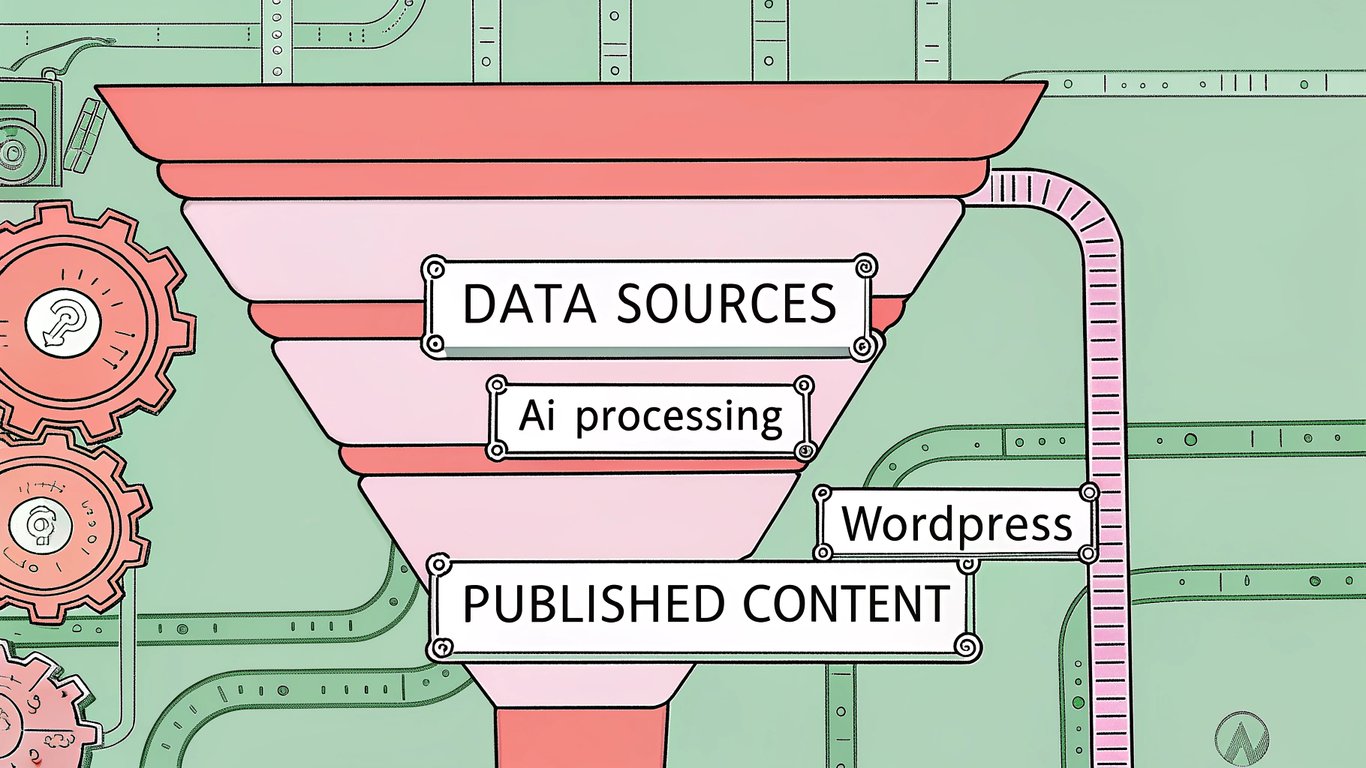
The key components include content sourcing (where information comes from), AI processing (how that information becomes an article), WordPress integration (how it gets published), and scheduling mechanisms (when it goes live). Modern systems can handle everything from keyword research to image generation to SEO optimization.
How Auto Blogging Works: The Technical Process
Here's how a typical workflow operates:

- A trigger initiates the process (scheduled time, new data, or manual activation)
- The system researches the topic using search APIs, databases, or RSS feeds
- AI analyzes the research and creates an outline
- Content generation happens based on that outline
- SEO optimization adds keywords, meta descriptions, and proper formatting
- Images get generated or sourced from stock libraries
- The final post publishes to WordPress via the REST API or plugins
The entire process can run without human input, though that's rarely a good idea. Most effective systems include checkpoints where someone reviews the content before it goes live.
Auto Blogging vs. Manual Blogging vs. AI-Assisted Writing
These three approaches sit on a spectrum of automation:
| Approach | Human Involvement | Quality Control | Speed |
|---|---|---|---|
| Manual Blogging | Complete control over every aspect | Highest - you review everything | Slowest - hours per post |
| AI-Assisted Writing | You guide, AI helps with drafts | High - you edit and refine | Moderate - 1-2 hours per post |
| Auto Blogging | Minimal - setup and occasional review | Variable - depends on system | Fastest - minutes per post |
Manual blogging gives you complete control but takes forever. AI-assisted writing speeds things up while keeping you in the driver's seat. Auto-blogging maximizes speed but requires careful setup to maintain quality.
Key Components of a WordPress Auto Blog System
Every effective auto-blogging system needs four essential elements. First, reliable content sources that provide accurate, up-to-date information. Second, AI agents capable of processing that information and generating readable content. Third, solid WordPress integration through plugins or API connections. Fourth, scheduling and quality control mechanisms to ensure posts meet your standards before going live.
The weakest link determines your results. Amazing AI won't help if your content sources are garbage. Perfect WordPress integration doesn't matter if your AI generates nonsense.
Legitimate Use Cases for WordPress Auto Blogging
Auto-blogging gets a bad reputation because people have used it to spam the internet with junk. But there are legitimate ways to use automation that actually provide value to readers.
Content Curation and News Aggregation
If you're covering a fast-moving industry, automation can help you aggregate news from multiple sources and add your own commentary. The key is proper attribution and adding genuine insight. You're not just copying articles; you're synthesizing information and providing context your audience can't get elsewhere.
Multi-Language Content Distribution
Translating your existing content into multiple languages makes sense for global audiences. AI translation has improved dramatically, though you'll still want native speakers to review the output. This approach lets you reach new markets without maintaining separate content teams for each language.
Data-Driven Content Generation
Some content is inherently data-driven. Market reports, statistical updates, and performance summaries can be automated because they're based on structured data. If you're pulling numbers from APIs or databases and formatting them into readable posts, automation makes perfect sense.
Content Repurposing and Format Transformation
Got a podcast or video series? AI can transcribe the content and transform it into blog posts. This isn't creating something from nothing; you're repurposing content you've already created in one format into another. The original expertise and value are still there.
Research-Based Content Creation
Modern AI agents can conduct genuine research by querying multiple sources, synthesizing information, and creating comprehensive articles. Tools like n8n's WordPress Auto-Blogging Pro template conduct deep research on topics before generating content. This approach creates original work based on multiple sources rather than just rewriting existing articles.
Risks and Pitfalls of WordPress Auto Blogging
Let's be honest about the dangers. Auto-blogging can absolutely destroy your site's reputation and search rankings if you do it wrong.
Google Penalties and SEO Consequences
Google's spam policies explicitly target low-quality automated content. If your auto-blog pumps out thin, repetitive, or unhelpful content, you're risking algorithmic penalties or manual actions. Recovery from these penalties can take months or might never happen.
The algorithm has gotten better at detecting patterns that indicate automated content. Unnatural keyword stuffing, repetitive phrasing, and lack of genuine expertise all trigger red flags.
Duplicate Content and Copyright Issues
Scraping content from other sites and republishing it isn't just bad for SEO; it's potentially illegal. Copyright infringement can result in DMCA takedown notices, legal action, and permanent damage to your site's reputation. Even if you're not copying word-for-word, heavily paraphrasing someone else's work without attribution is ethically questionable.
Quality Control Challenges

AI makes mistakes. It hallucinates facts, misunderstands context, and sometimes generates complete nonsense with absolute confidence. Without human review, these errors make it into published posts where they damage your credibility. I've seen automated posts claim products have features they don't have or cite statistics that don't exist.
Brand Reputation Risks
Your content represents your brand. Publishing low-quality automated content tells readers you don't care about providing value. Once you've lost trust, it's incredibly hard to get it back. People will stop visiting your site, stop sharing your content, and stop recommending you to others.
Ethical Considerations and Transparency
Should you disclose that content is AI-generated? There's no clear consensus yet, but transparency is probably the safer bet. Some publishers add disclaimers; others don't. What's certain is that trying to pass off automated content as human-written and getting caught will damage your reputation more than being upfront about it.
Safe and Effective Automated Workflows Using AI Agents
Done right, automation can enhance your content operation without sacrificing quality. The key is building systems with appropriate safeguards.
The Human-in-the-Loop Approach
Never publish automated content without human review. Set up your workflow so drafts go into a review queue rather than straight to publication. Someone needs to verify facts, check tone, and ensure the content actually helps readers. This approach gives you the speed benefits of automation while maintaining quality control.
Building a Research-First Automation Workflow
Start with thorough research before generating content. Your AI agent should query multiple sources, extract relevant information, and synthesize it into an outline. Only then should it begin writing. This research-first approach creates content based on actual information rather than just predicting what words should come next.
Platforms like SEOwind focus on this orchestration of research, content generation, and SEO optimization rather than just asking AI to write something.
Quality Control Checkpoints and Validation
Build validation steps into your workflow. Run plagiarism checks, verify facts against reliable sources, and score content quality before publication. Some systems use secondary AI models to review the primary output and flag potential issues.
SEO Optimization in Automated Content
Automation should enhance SEO, not compromise it. Your workflow needs to handle keyword research, proper heading structure, meta descriptions, and internal linking. The content should target user intent, not just stuff keywords. Modern AI can do this well if you configure it properly.
Content Personalization and Audience Targeting
AI can tailor content to specific audience segments. You might generate different versions of the same article for beginners versus experts, or adjust tone and examples based on industry. This level of personalization would be impractical manually but becomes feasible with automation.
Tools and Technologies for WordPress Auto Blogging
The ecosystem of auto-blogging tools has matured significantly. You've got options ranging from simple plugins to complex workflow automation platforms.
WordPress Plugins for Content Automation
Several WordPress plugins handle auto-blogging, though quality varies widely. Look for plugins that integrate with reputable AI services and include quality control features. Avoid plugins that just scrape content from other sites.
AI Content Generation Platforms
The major AI platforms like OpenAI's GPT-4 and Anthropic's Claude power most modern auto-blogging systems. These models can generate coherent, contextually appropriate content when properly prompted. Specialized content AI tools build on these foundations with features specifically designed for blog creation.
Workflow Automation Tools
Platforms like n8n, Zapier, and Make let you build custom workflows without coding. You can connect research APIs, AI services, and WordPress into a single automated pipeline. n8n offers open-source flexibility, while Zapier and Make provide user-friendly interfaces with extensive integrations.
Content Research and Data Sources
Quality automation requires quality inputs. RSS feeds, news APIs, search engine APIs, and structured databases can all feed information into your system. The better your sources, the better your output.
Monitoring and Analytics Tools
Track how your automated content performs. Use Google Analytics, Search Console, and SEO tools to monitor traffic, rankings, and engagement. This data helps you refine your automation over time.
Best Practices for Implementing WordPress Auto Blogging
If you're going to automate content creation, do it responsibly. Here's how to avoid the common pitfalls.
Starting Small: Pilot Programs and Testing
Don't automate your entire content operation overnight. Start with one post per week and monitor the results. Test different prompts, sources, and workflows. Scale up only after you've proven the system works and maintains quality.
Creating Editorial Guidelines for Automated Content
Document your standards. What tone should content use? What topics are off-limits? What fact-checking is required? These guidelines help you configure AI systems and train reviewers who check automated output.
Balancing Automation with Original Content
Don't make your entire site automated. Mix automated posts with original, manually created content that showcases your unique expertise. A good ratio might be 30-40% automated content supporting 60-70% original work.
Disclosure and Transparency Practices
Consider adding disclaimers about AI-generated content. This might be a simple note at the bottom of posts or a dedicated page explaining your content creation process. Transparency builds trust, even if it means admitting you use automation.
Continuous Improvement and Optimization
Monitor performance metrics and refine your workflows based on what works. If certain topics or formats perform better, adjust your automation to produce more of that content. If quality issues emerge, add more validation steps.
Legal and Compliance Considerations
Understand copyright law, attribution requirements, and platform policies. Make sure your automation respects intellectual property rights and complies with WordPress terms of service. When in doubt, consult with a lawyer who understands digital content.
The Future of WordPress Auto Blogging
Auto-blogging isn't going away. AI will continue improving, making automation more accessible and effective. But the fundamentals won't change: quality matters, readers can tell the difference between helpful content and spam, and shortcuts that sacrifice value will eventually backfire.
The sites that succeed with automation will be those that use it to enhance their content operation, not replace human expertise entirely. AI should amplify your knowledge and help you reach more people, not become a substitute for actually knowing your subject.
If you're considering auto-blogging for your WordPress site, start with clear goals. What problem are you trying to solve? Is it publishing frequency, content variety, or reaching new audiences? Match your automation strategy to those specific needs rather than automating for automation's sake.
The technology exists to create sophisticated auto-blogging systems that produce genuinely useful content. Whether you should use it depends on your commitment to maintaining quality, your willingness to invest in proper setup, and your ability to monitor and refine the system over time. Done right, a wordpress auto blog can be a valuable tool. Done wrong, it's a fast track to irrelevance.