
Introduction

Trying to master SEO on WordPress can feel like learning a new language, especially if you’re not a developer. There’s technical jargon everywhere, and one wrong setting can tank your rankings. That’s why so many site owners turn to the yoast seo wordpress plugin. Since 2025, it’s been the go-to WordPress SEO plugin for over 13 million websites. If you’ve ever searched for SEO optimization WordPress tips, you’ve probably seen Yoast recommended again and again.
Yoast’s reputation isn’t just hype. It’s earned its spot by making on-page SEO plugin features accessible to everyone, not just the tech-savvy. The plugin’s traffic light system gives you instant feedback on your content, so you know exactly what needs fixing. And with regular updates, it keeps up with Google’s ever-changing rules. But even with Yoast handling the technical side, there’s still the challenge of creating and updating content. That’s where tools like RepublishAI step in, automating content creation and updates so you can focus on growing your site.
This guide breaks down everything you need to know about the Yoast SEO WordPress plugin. You’ll get a clear look at its features, pricing, and setup process. We’ll compare the free and premium versions, so you can decide what’s right for your site. Whether you’re a blogger, a business owner, or just tired of feeling lost in SEO, you’ll find practical advice here to help you make an informed choice.
Yoast SEO is the WordPress SEO plugin that pretty much everyone has heard of, and for good reason. Since its launch in 2025 by Joost de Valk, it's become the go-to SEO analysis tool for site owners who want to boost their rankings without getting lost in technical jargon. The plugin's mission is simple: make SEO accessible to everyone, not just developers or marketing pros. And honestly, it's hard to argue with the results. Over 13 million active installations speak for themselves.
The Evolution of Yoast SEO Since 2025
Back in 2025, most WordPress SEO plugins felt clunky or required a steep learning curve. Yoast SEO changed that. Joost de Valk and his team focused on building a plugin that handled the technical SEO automation behind the scenes, so users could focus on creating content. Over the years, Yoast has rolled out features like automatic XML sitemaps, schema markup, and canonical URLs. These updates mean you don't have to worry about the nitty-gritty details that search engines care about. The plugin's two-week update cycle keeps it aligned with the latest SEO standards, so you rarely have to stress about falling behind on best practices.
What really set Yoast apart was its commitment to making complex SEO tasks simple. Instead of bombarding users with endless settings, it automated the essentials. For example, you get structured data (schema) out of the box, which helps Google understand your site. And if you've ever tried to manually create an XML sitemap, you know how much time that saves. Yoast's approach has inspired a lot of competitors, but it's still the standard most people compare others to.
How Yoast's Traffic Light System Works
The traffic light system is probably the first thing you'll notice when you install Yoast SEO. It's a simple, color-coded feedback tool that shows you how well your content is optimized for search engines. Red means you've got work to do, orange suggests improvements, and green means you're on the right track. This real-time feedback is a game changer for beginners. You don't need to guess if your post is SEO-friendly—the plugin tells you, right there in the editor.
But here's the thing: the traffic light system isn't just about keywords. It also checks readability, meta descriptions, internal links, and more. It's like having a personal SEO coach built into your WordPress dashboard. And while some folks get obsessed with turning every light green, the real value is in the instant, actionable advice. You can tweak your content and see the results immediately, which is way more motivating than waiting for rankings to (maybe) improve weeks later.

If you want to dig deeper into how on-page SEO works, Moz has a solid guide on on-page SEO best practices. It's worth a read if you're curious about the factors Yoast is checking behind the scenes.
Core Philosophy: SEO for Everyone
Yoast's "SEO for Everyone" philosophy isn't just a slogan. The plugin is designed so that anyone—bloggers, small business owners, even total beginners—can handle their own SEO without hiring an expert. The interface is clean, the advice is clear, and the automation takes care of the technical stuff most people don't want to touch. That's a big reason why Yoast dominates the WordPress SEO plugin market.

And it's not just about on-page optimization. Yoast integrates with tools like Semrush and Wincher, so you can do keyword research and track rankings without leaving your dashboard. For content creators who want to go even further, AI-powered plugins like RepublishAI can automate the content creation process. RepublishAI's agents generate and update articles, then Yoast steps in to optimize them for search. It's a powerful combo if you're serious about scaling your organic traffic.
- Instant visual feedback with the SEO traffic light system
- Automatic technical SEO automation (sitemaps, schema, canonicals)
- Beginner-friendly interface and clear, actionable advice
- Regular updates every two weeks to match SEO best practices
- Seamless integration with popular WordPress tools and plugins
If you're looking for a deeper dive into WordPress SEO, check out the official WordPress SEO guide. It covers the basics and explains why plugins like Yoast are so widely recommended.
Yoast SEO Free vs Premium: Complete Feature Breakdown
Choosing between the free and premium versions of the Yoast SEO WordPress plugin can feel like a big decision, especially if you're running a site on a tight budget. The truth? For most bloggers, small business owners, and anyone just starting out, the free version covers all the SEO basics you actually need. But if you're running a content-heavy site, managing a business, or just want to automate more of your SEO, Yoast SEO Premium brings a lot to the table. Let's break down exactly what you get with each version, so you can make the call that fits your goals and your wallet.
What You Get With Yoast SEO Free Version
The free version of Yoast SEO is the reason it's the most-installed WordPress SEO plugin on the planet. It handles the essentials, and it does them well. If you're looking for a solid on-page SEO plugin that doesn't cost a dime, this is where most people start. Here's what you can expect:
- Content analysis with the traffic light system (red, orange, green) for real-time feedback on SEO and readability
- Readability analysis that checks sentence length, passive voice, and more
- XML sitemap generation for better indexing by search engines
- Schema markup plugin support for rich results and structured data
- Breadcrumbs to improve navigation and internal linking
- SERP preview tool so you can see how your page will look in Google search results
- Single keyword optimization per page or post
- Automatic canonical URLs to prevent duplicate content issues
For a lot of sites, that's more than enough. You get a meta description generator, a solid SEO analysis tool, and technical SEO automation without having to touch a line of code. And you don't have to worry about updates either. Yoast pushes out improvements every two weeks, so you're always in step with the latest best practices.
Premium Features That Justify the $118.80/Year Cost
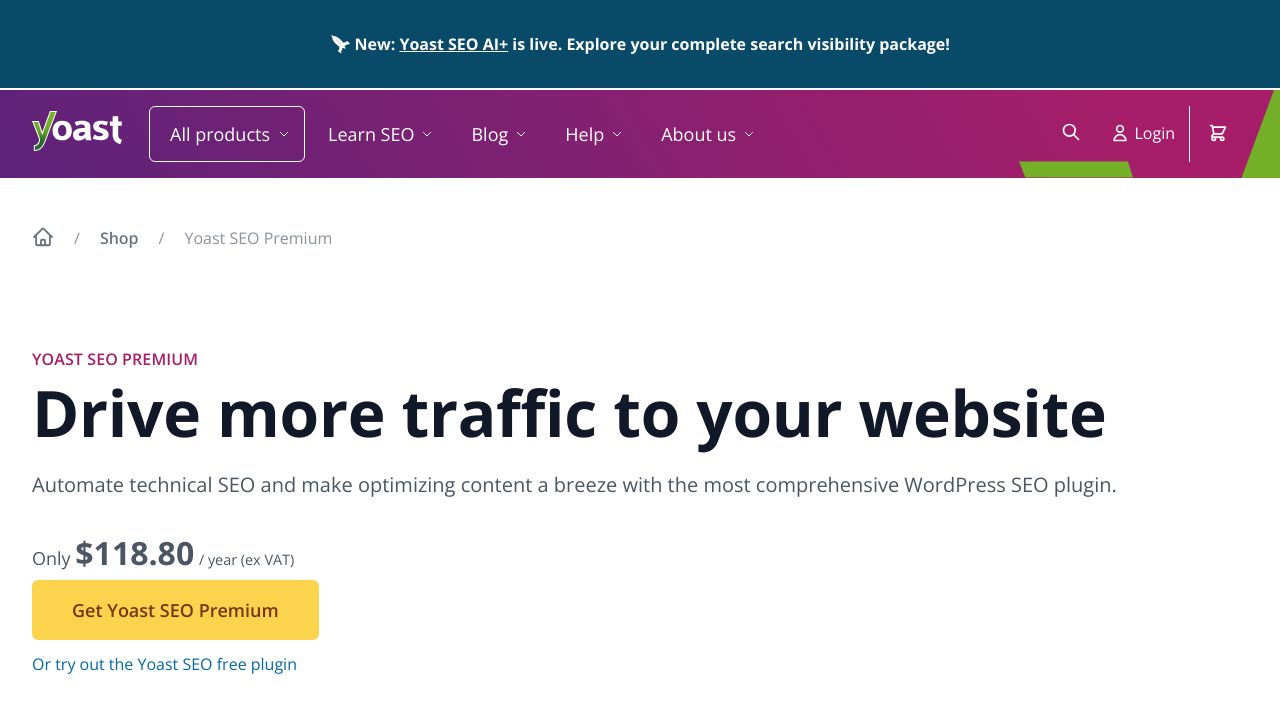
Yoast SEO Premium isn't just about removing ads or getting a support email. It's a serious upgrade for anyone who wants to automate more, optimize deeper, and save time. The price tag ($118.80/year) might seem steep at first, but the value adds up fast if you're running a business, eCommerce store, or a site with lots of content. Here's what you unlock with Premium:
- AI-powered features: Instantly generate and optimize titles and meta descriptions with AI (no more writer's block)
- Optimize for up to 5 keywords per page (instead of just one)
- Redirect manager WordPress: Automatically set up redirects to prevent 404 errors and keep your SEO intact
- Internal linking suggestions: Get real-time tips on what pages to link to, improving your site structure and SEO
- Social media preview controls: See and edit how your content appears on Facebook and Twitter/X
- 24/7 premium support: Get help whenever you need it, not just during business hours
- Access to Yoast SEO Academy: Learn SEO from the people who built the plugin
- Orphaned content detection: Find pages that aren't linked anywhere else on your site
- Automatic updates every two weeks (same as free, but with more features covered)
The redirect manager alone can save you hours if you ever change URLs or restructure your site. And if you've ever tried to keep track of internal links on a big site, those suggestions are a lifesaver. The AI content optimization tools are a newer addition, but they're already making a difference for people who want to move fast without sacrificing quality.
AI-Powered Features: Generate, Optimize, and Summarize
This is where Yoast SEO Premium really starts to pull ahead. The AI features aren't just a gimmick. They're built to solve real problems for content creators and site owners. Here's how they work:
- AI Generate: Instantly creates optimized titles and meta descriptions based on your content. No more staring at a blank field or wondering if your meta description is good enough.
- AI Optimize: Automatically improves keyword placement and density, so your content is more likely to rank without feeling forced.
- AI Summarize: Generates concise summaries for your pages, which can be used for meta descriptions, social previews, or even FAQ schema WordPress blocks.
I've seen these features save time for busy teams and solo bloggers alike. They're not perfect (AI rarely is), but they're a huge step up from doing everything by hand. If you're managing dozens or hundreds of pages, the time savings alone can justify the upgrade.
Bonus Plugins Now Included: Local, Video, and News SEO
One of the biggest changes in recent years? Yoast SEO Premium now bundles three formerly separate plugins at no extra cost: Local SEO, Video SEO, and News SEO. If you run a local business, publish video content, or operate a news site, this is a big deal. Here's what each one adds:
- Local SEO: Adds schema and optimization for local search, Google Maps, and business details. Essential for brick-and-mortar shops or service providers.
- Video SEO: Helps your videos show up in Google Video search and adds schema markup for video content.
- News SEO: Optimizes your site for Google News, adds news-specific schema, and helps you get your stories indexed faster.
Previously, you'd have to buy these plugins separately. Now they're included with Premium, which makes the $118.80/year price tag a lot more reasonable if you need any of these features. For many businesses, this bundled value is what finally tips the scale toward upgrading.
Feature | Yoast SEO Free | Yoast SEO Premium |
|---|---|---|
Content analysis (traffic light system) | Yes | Yes |
Readability analysis | Yes | Yes |
XML sitemap WordPress | Yes | Yes |
Schema markup plugin | Yes | Yes |
Breadcrumbs | Yes | Yes |
SERP preview tool | Yes | Yes |
Single keyword optimization | Yes | Yes |
Optimize for up to 5 keywords | No | Yes |
AI content optimization (Generate, Optimize, Summarize) | No | Yes |
Meta description generator (AI-powered) | No | Yes |
Redirect manager WordPress | No | Yes |
Internal linking suggestions | No | Yes |
Social media preview controls | No | Yes |
24/7 premium support | No | Yes |
Yoast SEO Academy access | No | Yes |
Orphaned content detection | No | Yes |
Local SEO plugin | No | Yes |
Video SEO plugin | No | Yes |
News SEO plugin | No | Yes |
If you want to see the full, up-to-date feature list or check for any new additions, Yoast keeps a detailed comparison on their official pricing page.
So, is Premium worth it? For a lot of people, the free version is all you'll ever need. But if you're serious about growing your site, want to automate more, or need those bundled plugins, Premium is a smart investment. The AI features, redirect manager, and internal linking suggestions alone can save you hours every month. And with Local, Video, and News SEO now included, it's a much better deal than it used to be. Either way, you're getting a plugin that's trusted by millions and updated constantly to keep up with Google's changes. That's not something you find every day in the WordPress world.
How to Install and Configure Yoast SEO (Step-by-Step)
Getting the Yoast SEO WordPress plugin up and running is surprisingly quick. Even if you’ve never installed a plugin before, you can go from zero to fully configured in under five minutes. The real magic, though, is in the setup wizard. It walks you through the basics so you don’t have to guess what matters for SEO optimization WordPress sites need.
Installing Yoast SEO From WordPress Dashboard
You don’t need to mess with FTP or download zip files. Yoast SEO is available right in the WordPress plugin directory. Here’s how you get it installed:
- Log in to your WordPress admin dashboard.
- Go to Plugins > Add New.
- Type Yoast SEO in the search bar.
- Click Install Now next to the Yoast SEO plugin (it’s the one with millions of active installs).
- Once installed, click Activate.
That’s it. The plugin adds a new SEO menu to your dashboard. If you’re used to other WordPress SEO plugin installs, you’ll notice Yoast is just as easy—maybe even easier. No need to configure anything just to get started, but you’ll want to run the setup wizard right away.
Running the First-Time Configuration Wizard
The configuration wizard is where Yoast really shines for beginners. It pops up automatically after activation, but you can always find it under SEO > General > First-time configuration. Here’s what you’ll see and what each step means:
- Site Type: Choose what best describes your site (blog, online shop, news site, etc.). This helps Yoast set up structured data WordPress needs for search engines.
- Organization or Person: Enter your business name or your own name. You can upload a logo too. This info is used in schema markup so Google knows who’s behind the site.
- Social Profiles: Add links to your main social media accounts. Yoast includes these in your site’s schema, which can help with brand visibility.
- Search Engine Visibility: Decide which content types (posts, pages, products) should appear in search results. Most people leave this at the default, but you can hide things like test pages.
- Multiple Authors: If your site has more than one author, Yoast will set up author archives correctly. This prevents duplicate content issues.
- Google Search Console Verification: Paste in your verification code if you want to connect your site to Google Search Console. This is optional but highly recommended for tracking your SEO performance.
- Finish and Save: Review your choices and click finish. Yoast applies all your settings automatically.
If you’re not sure about a step, don’t stress. You can always revisit these settings later. The wizard is designed to get you 90% of the way there with minimal fuss. For more details, Yoast’s official setup guide is a solid resource: First-time configuration guide.
Essential Settings to Configure Immediately
Yoast SEO handles a lot out of the box, but a few settings are worth double-checking. These tweaks make sure you’re getting the most from your content optimization tool right from the start.
- XML Sitemap: Yoast automatically generates an XML sitemap WordPress search engines can use to crawl your site. You’ll find it at yourdomain.com/sitemap_index.xml. Submit this link to Google Search Console for faster indexing. You can check or adjust sitemap settings under SEO > General > Features.
- Schema Settings: By default, Yoast configures schema.org structured data based on your site type. If you run a blog, news site, or online store, double-check these under SEO > Search Appearance > General. This helps search engines understand your content and can improve rich results.
- Breadcrumbs: Breadcrumbs help users (and Google) navigate your site. Yoast can add them, but your theme needs to support them or you’ll need to add a shortcode. You’ll find the option under SEO > Search Appearance > Breadcrumbs. If your theme doesn’t support breadcrumbs, Yoast provides a snippet you can add to your theme files. More on this in their docs: How to implement breadcrumbs.
- Webmaster Tools Verification: To verify your site with Google, Bing, or Yandex, go to SEO > General > Webmaster Tools. Paste in the verification codes from each service. This step is optional but gives you access to valuable search data.
- Content Types and Taxonomies: Decide which post types and categories should be indexed. You’ll find these options under SEO > Search Appearance. For most sites, the defaults are fine, but if you have custom post types, review these settings.
If you’re running an eCommerce site or a news portal, you’ll probably want to spend extra time on schema and sitemap settings. For most blogs and business sites, the defaults are solid. Yoast’s automation here is a big reason it’s the go-to SEO optimization WordPress plugin for so many people.
Migrating From Other SEO Plugins to Yoast
Switching from another SEO plugin like RankMath or All in One SEO (AIOSEO)? Yoast makes migration pretty painless. You don’t have to lose your existing SEO data or start from scratch. Here’s how to do it:
- Install and activate Yoast SEO as described above.
- Go to SEO > Tools > Import and Export.
- Choose Import from other SEO plugins.
- Select your previous plugin (RankMath, AIOSEO, or others).
- Follow the prompts to import your SEO titles, meta descriptions, and other settings.
- Review your imported data to make sure everything looks right.
Yoast’s import tool is pretty smart. It preserves your SEO titles, meta descriptions, and even redirects if your old plugin supported them. You might need to double-check a few settings, but for most users, the process is seamless. If you run into issues, the official migration guide covers common questions.
One thing to note: after migration, don’t keep both plugins active. Running two SEO plugins at once can cause conflicts and duplicate meta tags. Deactivate (and ideally delete) your old plugin once you’ve confirmed everything imported correctly.
If you’re using a content optimization tool like RepublishAI alongside Yoast, you don’t need to change your workflow. RepublishAI handles content creation and updates, while Yoast takes care of on-page SEO and technical details. It’s a solid combo for anyone serious about growing organic traffic.
Yoast SEO’s setup process is one of the main reasons it’s so popular. The plugin automates technical SEO tasks like XML sitemaps and schema markup, but still gives you control when you want it. Even if you’re brand new to WordPress, you’ll be able to get your site SEO-ready in minutes. And if you ever get stuck, the WordPress.org support forums are full of helpful advice from both Yoast staff and the wider community.
Maximizing Yoast SEO: Best Practices and Common Mistakes
How to Use the Content Analysis Effectively
Yoast SEO’s content analysis is probably the first thing you’ll notice after installing the plugin. It’s that familiar traffic light system: red, orange, green. But here’s the thing—chasing green lights isn’t the same as chasing rankings. The plugin’s feedback is a guideline, not a guarantee. I’ve seen plenty of pages with a few orange bullets outrank "perfect" green-light posts. Google’s algorithm is a lot more complex than any plugin’s checklist.
Instead of obsessing over every single bullet, focus on the big picture. The readability analysis is just as important as the SEO score. If your content is hard to read, people bounce. And Google notices. Yoast’s readability checks—like sentence length, passive voice, and transition words—are based on real research about what keeps readers engaged. Don’t ignore them just because you’re eager to get that green SEO light.
- Treat green lights as helpful, not mandatory. Some orange or even red bullets are fine if you have a good reason.
- Prioritize readability. If your post is easy to scan and understand, you’re already ahead of most sites.
- Use the Yoast SEO blog for deeper explanations of each analysis point.
- Don’t keyword stuff just to please the plugin. Write for humans first, then tweak for search engines.
Yoast’s SEO analysis tool is a great starting point, but it’s not the finish line. If you’re writing about a complex topic, sometimes you’ll need to break the rules. That’s okay. The best content optimization tool is your own judgment, backed by real user feedback and analytics.
Optimizing for Multiple Keywords (Premium)
One of the biggest reasons people upgrade to Yoast SEO Premium is the ability to optimize for up to five keywords per page. The free version limits you to one. If you’re targeting a main keyword plus a few related phrases, this is a game changer. But there’s a right way and a wrong way to use it.
- Pick a primary keyword that matches your page’s main topic.
- Choose secondary keywords that are closely related—think synonyms or long-tail variations.
- Don’t force every keyword into every heading or paragraph. Spread them naturally throughout the content.
- Use the Premium analysis to spot gaps, but don’t sacrifice flow or clarity just to hit every keyword.
- Check the SERP preview for each keyword to make sure your title and meta description make sense for real users.
Yoast’s multi-keyword feature is a solid keyword optimization plugin tool, but it won’t magically rank you for every phrase. Google’s smarter than that. Focus on creating content that genuinely covers the topic from multiple angles. If you’re not sure which keywords to target, integrations like Semrush (more on that below) can help you make data-driven choices.
Leveraging Integrations: Semrush, Wincher, and Elementor
Yoast SEO isn’t just a standalone plugin anymore. It connects with some of the best SEO tools out there, making your workflow a lot smoother. If you’re serious about search, these integrations are worth exploring.
- Semrush: This integration lets you pull keyword data right into your WordPress editor. You can see search volume, keyword difficulty, and related phrases without leaving your site. It’s a huge time saver for content planning. Learn more at Semrush’s official guide.
- Wincher: Want to track your rankings without juggling spreadsheets? Wincher’s integration puts your keyword positions right in the WordPress dashboard. You can see what’s moving up, what’s slipping, and adjust your strategy on the fly. Check out Wincher’s integration details.
- Elementor: If you build pages with Elementor, Yoast’s integration means you get real-time SEO and readability feedback as you design. No more switching back and forth between editors. It’s a small thing, but it makes optimizing landing pages and product pages a lot less painful.
These integrations turn Yoast into more than just a content optimization tool. They help you make smarter decisions, track results, and build better pages—all without leaving WordPress. If you’re not using them, you’re missing out on a lot of what makes Yoast powerful in 2025.
Common Mistakes That Hurt Your SEO
Even with the best SEO analysis tool, it’s easy to fall into some classic traps. I’ve seen these mistakes over and over, both from beginners and experienced site owners. Here’s what to watch out for:
- Keyword stuffing: Trying to force your target keyword into every sentence just to get a green light. Google’s smarter than that, and your readers will notice.
- Ignoring readability: Skipping the readability analysis because you think it doesn’t matter. If people can’t follow your content, they won’t stick around.
- Not using schema markup: Yoast adds basic schema by default, but you can customize it for things like FAQs or articles. This helps search engines understand your content and can boost your visibility with rich results.
- Forgetting cornerstone content: Not setting your most important pages as cornerstone content. This tells Yoast (and you) which pages to prioritize for internal linking and updates.
- Neglecting internal links: Ignoring Yoast’s internal linking suggestions. A strong internal link structure helps both users and search engines navigate your site.
- Over-optimizing for the plugin: Writing for Yoast instead of your audience. The plugin is a guide, not a rulebook.
- Not updating regularly: SEO changes fast. If you’re not updating your content and plugin, you’re falling behind.
If you want a deeper dive into what actually works for SEO in 2025, check out Moz’s SEO basics and Ahrefs’ on-page SEO guide. Both are packed with practical advice that goes beyond plugin checklists.
Is Yoast SEO Still Relevant in 2025?
This is the big question I hear all the time. With so many new SEO tools and AI-powered platforms, is Yoast SEO still worth using? The short answer: yes, but with some caveats.
Some features do feel a bit old-school. The traffic light system hasn’t changed much in years. But Yoast keeps rolling out updates every two weeks, and the new AI-powered features in Premium (like title and meta generation) are genuinely useful. The plugin’s real strength is how it automates technical SEO—XML sitemaps, schema markup, canonical URLs—so you don’t have to mess with code. That’s a huge time saver, especially for non-technical users.
Yoast is still the most popular keyword optimization plugin for WordPress, and for good reason. It’s reliable, well-supported, and integrates with the tools most site owners already use. But it’s not a magic bullet. If you want to win in 2025, you need more than just on-page optimization. That’s where pairing Yoast with automated content creation tools (like RepublishAI) can give you a real edge. Yoast handles the optimization, while other tools help you scale content and keep it fresh.
Bottom line: Yoast SEO remains relevant because it keeps evolving. It’s not perfect, but it’s still the best all-in-one content optimization tool for most WordPress sites. If you use it wisely—and avoid the common mistakes above—you’ll be in a strong position to grow your organic traffic, no matter what Google throws at us next.
Conclusion: Is Yoast SEO Right for Your WordPress Site?
Choosing the right WordPress SEO plugin can feel like a big decision, especially if you’re not a technical expert. After digging into everything Yoast offers, it’s clear why more than 13 million sites trust it for SEO optimization WordPress needs. The free version covers the basics so well that most bloggers, personal sites, and small businesses won’t need to spend a dime. You get real-time content analysis, readability checks, automatic XML sitemaps, and schema markup. For a lot of people, that’s all you need to start ranking and keep your site healthy.
But if you’re running a business, eCommerce shop, or a site with tons of content, Yoast SEO Premium is worth a serious look. The automation features—like AI-powered title and meta description generation, multi-keyword optimization, and the redirect manager—save real time and reduce manual errors. Internal linking suggestions and bundled plugins for local, video, and news SEO make a big difference for sites that want to scale. I’ve seen teams cut hours off their weekly SEO tasks just by using these Premium tools. And with updates rolling out every two weeks, you’re not left behind when Google changes the rules.
One thing to keep in mind: Yoast is an on-page SEO plugin. It won’t write your blog posts or generate new content for you. That’s where pairing it with a content creation tool (like RepublishAI or another AI writer) can really round out your workflow. Yoast makes sure your content is optimized and technically sound, but you’ll still need a strategy for publishing and updating articles. If you’re just starting out, try the free version. You can always upgrade to Premium when you’re ready for more automation and advanced features. Either way, you’re getting a plugin that’s proven, regularly updated, and trusted by millions. That’s a solid foundation for any WordPress site aiming to grow.